Thursday, April 23, 2009

5 titans


This item appeared in the 15-16 July 2006 edition of the Wall Street Jounal.


William Randolph Hearst biographer David Nasaw Five Best column recommends five of his favorite biographies of business moguls:

1. Titan. (1998). Ron Chernow on John D Rockefeller, Sr.


2. Morgan. (1999). Jean Strouse.


3. The Colonel. (1997). Richard Norton Smith's on Robert Rutherford McCormick


4. Orson Welles. (v.1: 1997; v.2: 2006). Simon Callow.


5. Why Sinatra Matters. (1998). Pete Hamill.

Wednesday, April 22, 2009

Assisted Loving

Bob Morris. Assisted loving: true tales of double dating with my father. (2008). New York : HarperCollins.

A patron asked for it on 15 April; I inter-loaned it. Picked it up today, and started reading. A great read. I laugh out loud.

In Chapter 3 ("Fa La La, etc.") he discusses the holidays: These are my party friends -- journalists, stylists, publicists (but no socialists) ...

The Novel the Soviets Feared

Zamyatin, Yevgeny. We. (1993).translated and with an introduction by Clarence Brown. NY: Penguin Books.

Reviewed by John J. Miller in WSJ on 26 July 2006.

Authors sometimes gripe about the long wait between the completion of a book and its publication. Perhaps the sad case of the Russian writer Yevgeny Zamyatin will help them put things in perspective: He finished his novel "We" in 1921, but it didn't appear in print in his native land until 1988.

The problem wasn't that Zamyatin and his manuscript were obscure or unknown. Rather, it was that they offended communist censors, who correctly understood "We" to be a savage critique of the totalitarianism that was starting to take shape in the years following the Russian Revolution.

While there is no denying the horrors and evil perpetrated by Lenin, Stalin and their heirs, it is worth pointing out that the reviewer, John J. Miller, writes for the National Review, William F. Buckley's media outlet. A look at Miller's bio is telling; this is from the NR's website's bio of him: John J. Miller is National Review magazine’s National Political Reporter, based in Washington, D.C.

Miller is the author of three books: A Gift of Freedom: How the John M. Olin Foundation Changed America, Our Oldest Enemy: A History of America’s Disastrous Relationship with France (co-authored by Mark Molesky), and The Unmaking of Americans: How Multiculturalism Has Undermined the Assimilation Ethic.

Just for the sake of full disclosure.

The Wonga Coup

The plot came from a novel, but it was a real-life attempt to topple an African regime.

THE WONGA COUP
By Adam Roberts
(PublicAffairs, 303 pages, $26)


Reviewed 26 July 2006

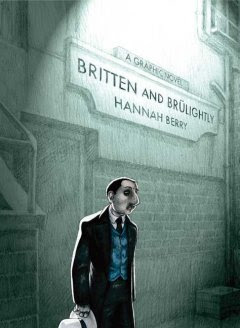
Britten and Brülightly

Britten and Brülightly
By Hannah Berry
Edition: illustrated
Published by St. Martin's Press, 2009
ISBN 0805089276, 9780805089271
112 pages

A new graphic novel.

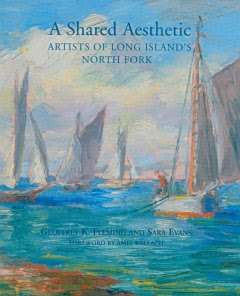
A Shared Aesthetic

A Shared Aesthetic: Artists of Long Island's North Fork. (2008). Fleming, Geoffrey K.; Evans, Sara & Amei Wallach
NY: Hudson Hills Press LLC.
ISBN 155595300X, 9781555953003
250 pages

On New Book cart.

Monday, April 20, 2009

Pieces of April

Cute, funny, nice film.


April Burns, the eldest daughter in a highly dysfunctional family, lives in a small tenement apartment on the Lower East Side of Manhattan with her boyfriend Bobby. Although estranged from her family, she opts to invite them for Thanksgiving dinner, probably the last for her mother Joy, who has breast cancer. The film focuses on three journeys: the family's arduous trek from suburbia to New York City, one punctuated by stops for Krispy Kreme doughnuts, bagels, Joy's frequent need for a restroom or a joint to ease her pain, a burial service for an animal they hit, and various arguments and recriminations; Bobby's efforts to find a suit so he can make a good impression on his girlfriend's relatives; and April's preparations for the meal, a near disaster when she discovers her oven is broken. With the help of various neighbors, she manages to assemble dinner, while learning to appreciate the importance of family and making some new friends in the process.

Some of the neighbors in the tenement building are memorable: the Chinese family that ultimately comes to April's rescue; Eugene and Evette, a black couple whose children will be visiting later in the day, and who help April get started cooking her turkey, as well as understand that convenient food is no substitute for good food.

Smokin' Aces

Nothing but profanity and unlimited gun play. A piece of crap.

Saturday, April 18, 2009

Books on Language

April 17, 2009, 6:55 P.M. ET
Books on Language
by MICHAEL QUINION

1. The Stories of English 427 C [420s in Dewey are English & Old English; 427 is for variations]
By David Crystal
Overlook, 2004


This richly textured, nontechnical account of the evolution of English is fascinating because it interweaves multiple narratives. In parallel with the standard language, David Crystal discusses varieties usually considered nonstandard -- dialect, slang and the speech of ethnic minorities -- which previously hadn't received the same level of attention. Traditionalist speakers and grammarians deplore such varieties as inferior or corrupt, but they are increasingly becoming accepted as legitimate, not least because only one in three speakers of English now has it as a mother tongue. With a cornucopia of examples that range from "The Canterbury Tales" to "The Lord of the Rings," and from the correspondence of medieval kings to Internet chatroom gossip, Crystal's exposition is a delight.


2. Language in Danger 417.7 D [410s are Linguistics; 417 is Dialectology & historical linguistics]
By Andrew Dalby
Columbia University, 2003
Languages not only change, they also die: World-wide, a language vanishes on average every two weeks. Andrew Dalby argues that each disappearance diminishes us, because a language encapsulates local knowledge and ways of looking at the human condition that die with the last speaker. Stronger languages squeeze out others: An early example is the language extinction that occurred around the Mediterranean in classical times, through the rise of Latin. Closer to our own time, minority languages -- Irish, Welsh, Native American and Australian tongues -- were banned in school to force minority groups to speak the language of the majority. The mood is now swinging toward encouraging minority languages, and some of those in danger may be saved. Dalby's engrossing account documents endangered languages throughout the world.


3. The Thurber Carnival 817 T [810s are American Literature; 817 is Satire & humor]
By James Thurber
Harper, 1945
James Thurber's antic attitude to language was a revelation when, at age 12, I bought this compilation of essays and stories in a British paperback edition. I first understood that grammar could actually be interesting when I read "Here Lies Miss Groby," his recollection of an English-composition teacher who drilled into her charges that metonymy means "Container for the Thing Contained," as in the phrase "Friends, Romans, countrymen, lend me your ears" -- "ears" is not meant literally; their hearing is. Young Thurber lies awake at night wondering about a wife threatening to hit her husband with the milk -- would "milk" be a case of Thing Contained for the Container? Thurber's whimsical drawings are a joy -- one has a puzzled man sitting on a motionless sled, holding his dog on a leash, as a passing skater, apparently steeped in Swinburne's poetry, shouting: "I said the hounds of spring are on winter's traces, but let it pass, let it pass!" I am glad to have encountered Thurber's storytelling skills and his humor so early in life.


4. Words and Rules 400 P [400s are Language]
By Steven Pinker
Basic Books, 1999

When Americans prefer "snuck" and "dove" to the British "sneaked" and "dived," they're pointing up one of the curiosities of English: the battle between regular and irregular verbs. These two American usages are especially odd because they're 19th-century revivals, reversing what grammarians often assert is an unstoppable historical trend toward regularization. The battle of the verbs can be especially vexing for children, who are avid for rules when they learn a language -- rules that lead to errors such as "breaked" and "holded." Steven Pinker's research confirms that we actually use two tools for making words: rules and memory. Regular verbs pop into mind almost automatically; irregular ones take longer to process because they must be retrieved from memory. Pinker's "Words and Rules" is erudite, readable and funny, leading the reader through a great range of topics, one of which is the cause of the gradual transformation of language over time.

5. The Moon Is a Harsh Mistress SF Heinlein
By Robert Heinlein
Putnam, 1966
Science fiction has invented much vocabulary -- "robot," "force field" and "spacesuit," for instance -- that has since reached the mainstream. And linguistic change itself has been a significant sub-theme in many science-fiction works, partly because it contributes to the sense of otherness that is key to the suspension of disbelief, partly because it is a useful indicator of social and cultural distinctness. Anthony Burgess's anglicized Russian slang in "A Clockwork Orange" and George Orwell's Newspeak in "Nineteen Eighty-Four" are two famous examples. Another memorable example is Robert Heinlein's "The Moon Is a Harsh Mistress." With a sentient computer as a main character, the story is set in a lunar penal colony in 2075, where the inhabitants speak in an English dialect influenced by Russian and Chinese: not yet a pidgin, certainly not yet a creole, but a form of speech indicative of the changes that happen when disparate language communities are forced to communicate.

Mr. Quinion's most recent book, "Gallimaufry: A Hodgepodge of Our Vanishing Vocabulary" (Oxford), has just been published in paperback.

The Curse of Promise Unfulfilled

Isaac Rosenfeld: The highs not so high, the lows not so low


In "Enemies Of Promise," the British literary critic Cyril Connolly famously tried to account for his failure to live up to his own expectations of literary greatness and those of others. It was a merciless self-portrait, but it was meant to describe more than a single author's plight: There is a special precinct of literature reserved for those who never became the major writers that everyone expected them to be.

Enemies Of Promise - 820.9 C

Isaac Rosenfeld (1918-56) is surely one of this number. His 1946 novel, "Passage From Home," earned him accolades from the New York intellectuals, a crowd not given to accolades. It was written when Rosenfeld was 28, and it seemed to mark the coming-of-age of a writer who would sweep all before him. Certainly, at that moment, Rosenfeld had outstripped his friend Saul Bellow, whose "Dangling Man" seemed partly caught in the constricting embrace of its European models.
But Mr. Zipperstein's account suggests, perhaps unintentionally, that the real story of Isaac Rosenfeld is less a matter of extremes: Yes, he was gifted, but he was never destined for greatness -- nor did he entirely fail. The highs were lower, and the lows higher, than the myth would have it. As for the highs, Mr. Zipperstein notes that the critic Irving Howe faulted (not unfairly) "Passage From Home" for relying, weakly, more on rumination than on description. As for the lows, the Rosenfeld reviews and stories routinely collected under the rubric of a sorry falling-off from early promise are in fact "a marvel of output," as Mark Schechner has written. A 20th-century Jewish Hazlitt, Rosenfeld turned every subject to his own purpose, so that the judgments in nearly every review became an implicit manifesto, pointing to what writing should be. He was often more acute than the professional critics who would later lament his "failure."

Why not unfairly, rather than, simply, fairly?

Mr. Zipperstein does a splendid job of sifting through the details of Rosenfeld's life, reminding us of his importance and acquainting us with his work. He does not, thank goodness, impose his reading of Rosenfeld's place in literary history too insistently, perhaps recognizing that, in a first full biography, the life must take precedence over the work. What he offers instead is the kind of attention for which Rosenfeld should not have had to wait, after his death, half again as long as he lived.

One-Vehicle Presidential Motorcade

"Harry Truman's Excellent Adventure"
By Matthew Algeo
Chicago Review Press, 262 pages, $24.95

973.918 A

When Harry and Bess Truman took their vacation, they were part of a growing American pastime: the automobile vacation. Postwar prosperity, brand-new highways and an itch to see the country made road travel popular with the middle class. In the golden age of the American family vacation, Detroit's Big Three auto makers manufactured family-friendly cars that were both roomy and affordable. The price of gas was 27 cents per gallon, and uniformed attendants filled up the tank and cleaned the windshield. Motels -- where you could pull right up to the door of your room -- were a new phenomenon.

27 cents? A gallon of regular gas went for 29.9 cents in 1970, 1971.

In keeping with one of the book's conceits, Mr. Algeo makes a pilgrimage to the Grand Ballroom of Philadelphia's Bellevue-Stratford Hotel, where Truman spoke. "I was standing in the very spot where Harry had stood exactly fifty-five years earlier, front and center in his white dinner jacket, under the blazing klieg lights, measuring an imaginary fish, and giving Ike hell." Through such vignettes Mr. Algeo takes us back to a time, despite Cold War anxieties, "of unbridled optimism," then brings us forward to our supposedly more cynical age.

Truman was criticizing Eisenhower for the latter's proposal to cut defense spending. A rich irony.


Harry Truman drinks a Coke at a service station in Frederick, Md.

The author retraced the Trumans' trip in stages from fall 2006 to summer 2008, hunting down the service stations where the couple bought gasoline, the diners where they ate a square meal and the hotels where they stayed the night. He even tracked down eyewitnesses who remembered the Trumans passing through, including one man who had saved the Coke bottle that Truman drained at a Gulf gas station in Maryland. The station owner asked the former president to take his mechanic to task for being a Republican, Mr. Algeo reports, but Truman replied that it was "too hot to give anybody hell." We even see the former president polishing off the soda in one of the many charming snapshots of the traveling Trumans that Mr. Algeo unearthed.

Former President Harry Truman unloads his car's trunk at a motel in Decatur, Ill., on June 19, 1953.


The small-town America that Truman visited -- where he seems to have been enthusiastically greeted by folks eager to thank him for his service -- is of course much changed when Mr. Algeo arrives, following in the president's footsteps. Those same towns are now generally in a decline that began a few years after Truman passed through, when President Eisenhower signed the Federal-Aid Highway Act of 1956 and created the interstate highway system that sent travelers whizzing past towns where once they might have stopped for gas or a meal or an overnight stay. As Mr. Algeo reports, the Parkview Motel in Decatur, Ill., where the Trumans stayed in 1953, is now owned by the Illinois Department of Corrections, home to prisoners finishing out the last year of a sentence.


Harry Truman speaking in Philadelphia

Friday, April 17, 2009

The Lookout

After seeing Definitely, Maybe, I looked for films that the actors were in, and found this film with Isla Fisher. Didn't work. I'd give it a 5.

An admired high school hockey player with a bright future, drives in the night with his girl friend and two other friends with his headlights off with devastating results. The former athlete is left with a brain injury that prevents him from remembering many things for extended periods of time. To compensate, he keeps notes in a small notebook to aid him in remembering what he is to do. He also lives with a blind friend who aids him. He is unable to have meaningful job and he goes to work as a night cleaning man in a bank. He comes under the scrutiny of a gang planning to rob the bank. The leader befriends him and gets him involved with a young woman who further reels him in. Confused, but wanting to escape his current existence, he initially goes along with the scheme. When he realizes he is being used, he attempts to stop the robbery, which of course immediately goes awry.

That's the summary in Alisweb. An interesting idea, but quite a violent film that runs mostly on empty. Acting is good, especially the lead, Joseph Gordon-Levitt; even Matthew Goode, who plays the chief bad guy, acts well. Isla Fisher is wasted as a damsel who is used to reel in the bait with her body. The film simply relies on the premise of the accident and its effects, and, ultimately, on violence. Maybe a 5.

And Jeff Daniels again gets stuck with bad hair (though not as bad as when he played Col. Joshua Lawrence Chamberlain in Gettysburg.

Tuesday, April 14, 2009

Gogol caught in Tug of Love

Born in present-day Ukraine, then part of the Russian Empire, Gogol later lived in St. Petersburg and wrote in Russian; yet his first published works, the short-story collections "Evenings on a Farm Near Dikanka" (1831-32) and "Mirgorod" (1835), were steeped in the culture, folklore and language of the Ukrainian countryside. His later writings, notably the 1842 epic masterpiece "Dead Souls," shifted to Russian settings and sometimes evidenced his growing Russian nationalism. A much-quoted passage in "Dead Souls" compares Russia to a speeding troika driven by a mysterious force: "Everything on earth flies past, and other nations and states glance warily as they step aside and give her the right of way."

Industrial Revolutionaries

The Industrial Revolutionaries
By Gavin Weightman
Grove, 422 pages, $27.50

Originally powered by falling water, the factories sprang up where the water was, often deep in the countryside. The steam engine, first made practical by Thomas Newcomen and then made vastly more fuel efficient by James Watt, made work-doing energy cheap for the first time in human history. With the steam engine, factories could be located where labor was most available, and Britain's urban industrial cities, such as Manchester and Birmingham, quickly expanded.

Soon after the turn of the 19th century a new type of steam engine, using high pressure, proved far more powerful per unit of weight than Watt's engine. At first, the new steam engines were employed to power ships, because the machinery was too heavy for the tracks used by horse-drawn railways.

Sunday, April 12, 2009

Definitely, Maybe

Ryan Reynolds and Abigail Breslin in “Definitely, Maybe.”

The New York Times review was quite positive.


At first I was afraid it might be too cute, but it worked. By the end, I really liked it. I watched the director's commentary version to get more of it. Nicely done. Really cute.

Will Hayes comes to New York from Wisconsin to work on the 1992 Bill Clinton New York primary campaign. Full of verve and optimism, he is assigned, first, to get coffee and bagels, second to get toilet paper. Everyone starts at the bottom, and those were his assignments. Eventually he does get to call potential donors, and proves his mettle.

Back in Wisconsin his sweetheart rued seeing him leave, afraid they would drift apart as Will decided New York was where he belonged. After several weeks she does travel to New York, only to announce to him that she has slept with his former roommate, and that she is breaking off their relationship, not to hurt him, but to set him free to pursie his dreams.

This all happens as Will is telling his 12-year-old daughter the story of how he met her mother, and how it came to be that the two of them are in the process of getting divorced.

Before leaving Wisconsin, Will had been given a small brown-paper-wrapped package by his sweetheart to deliver to someone in New York. That third woman enters his life when Will goes to visit her and finds an older man, grey-bearded, cigarette-smoking and scotch-drinking college professor and author Hampton Roth (played nicely by Kevin Kline). She is Hampton's current sweetheart; he is her thesis advisor. Will delivers the package, a diary from the past that this woman, Summer (actually Natasha; Will changed names and some events as he told his daughter his story) kept.

The second woman in the story was April, a woman working the copying machine at the New York Clinton headquarters. Cynical, self-professed apolitical, she

Wonderful town

Takes place in southern Thailand after the tsunami. I do not get it. I did not like it. It took more than an hour to develop a story at a snail's pace, and in the last ten minutes introduces senseless violence hung on a shingle of context as thin as a reed. Of course some gushed over it, the way some gush over a red stripe on a white canvass and call it sublime. Poppycock.

Mendy

An Orthodox Jew, a Satmar, faces a crisis of faith. A New York film. More of a play than a film, it works nicely.

Reign over me


How does a film about 9/11 get made? Aside from depicting the idealized heroics of Flight 93, a catharsis which may be based on nothing more than wishful thinking and projection, how does a serious film handle September 11th?

Reign over me is a very good way of doing it.

Alan Johnson (Don Cheadle) is a successful (read wealthy) Park Avenue dentist whose cosmetic dentistry practice is a gold mine that leaves him spiritually as empty as materially wealthy. One day he sees Charlie Fineman, his dental school roommate, on a New York, a Manhattan, street. Unable to get his attention, Johnson obsesses it over the missed opportunity to reconnect with his old college buddy, whom, he (and his daughter) knows, lost his family on one of the flights hijacked on September 11th and used as a weapon of destruction, to crash into a building a commit mass murder.

Finally he makes the connection, only to find Charlie nearly catatonic, off in a world where he listens to The Who's Quadrophenia and Springsteen's The River.

I mean, just look at that young face. And there was a scene when Charlie is holding the LP (one of his obsessions are LPs; the vinyl, the smell of the discs).

Charlie does not want to think about his family, about having lost them, in order to stave off the pain of thinking of them. As a result, he is a suppressed volcano largely oblivious to all around him. Largely. If any word is voiced about his loss, he erupts.

Johnson reaches out of the confines of his practice, his family, his wealth, and uses reconnecting with his old roomie as a way to break free of the prison that are his confines. Along the way he helps his old roomie, and himself.

Far from a perfect film, it is nonetheless an admirable attempt to speak about the human cost of 9/11 to the survivors.

Having accepted that touching his scars is a good thing, Charlie Fineman does so, and only moments later is in the throes of a trauma so deep and so hurtful he feels a need to immediately choke it off. How to do so? He drinks a bottle of wine, grabs his gun, and goes out looking to commit suicide. His way of doing so is to force a confrontation in front of two cops, drawing his gun, and, in effect, forcing the uniformed officers to shoot him.

They do not. This film is not about taking the easy way out: it confronts a very sensitive topic, and handles it deftly, humanely, admirably. In the end the film melts away with a cliche, because endings are always touch, even in the most innocuous of films. But before ending, it does an admirable job of dramatizing a powerful human dilemma. It touched me, deeply. The acting is wonderful. Adam Sandler is not usually a favorite of mine, but in this film he shines. Don Cheadle does his usual stellar work. Wonderful film.

Thursday, April 9, 2009

Man of the century

A newspaper reporter acts and lives as if it were the 1920s, using a typewriter, cliches from then; everyone and everything else is 1990s. Shot in black and white. Starts with enough to catch a viewer's interest, then muddles along, and two-thirds of the way through picks up steam. Cute, some laughs.

Monday, April 6, 2009

Chop Shop

Takes places in the Willets Point car shops area, across the street from the new Mets baseball stadium, a trianlge bounded by 126th Street, Willets Point Boulevard and Northern Boulevard. The DVD jacket calls it the Iron Triangle, a term I am not familiar with. In fact, Laura and I walked walked down to see Citi Field yesterday, and walked back to Flushing along Roosevelt Avenue, from where one can see that Triangle and the new stadium.

The film is too bright to be gritty, but it has a kind of harshness to the life it depicts: a 12-year-old waif wise to the hustling it takes to survive on his own and his 15-or-so-year-old sister take up residence in an upstairs room in a car-body repair shop. Alejandro works in steering business into the shop, learning how to do body repairs, peddling DVDs, stealing hub caps from cars parked at Shea Stadium, helping chop up a stolen car, and whatever else he can think of to make money. His sister, Isamar, works at a food cart, hangs out, and makes extra money by performing fellatio on truckers late at night. Ale longs to have a full life with Isamar, saving up money so the two of them can run their own food truck. The acting is not entirely polished, an aspect that acts to the realism of the film. Grim, hopeful, shot with a lot of hand-held cameras to capture characters as they walk, it is a gem of a film.

Saturday, April 4, 2009

Best Books About India

Best Books About India
Sudhir Kakar picks his favorite books about India


1. Ka FIC Calasso
By Roberto Calasso
Knopf, 1998

"Suddenly an eagle darkened the sky," begins "Ka," Roberto Calasso's vivid retelling of Indian myths. Calasso brings ancient stories as alive for a non-Indian reader as they continue to be for most Indians. For in India, tales about the origins of the world, of man and sex and death, are not cadavers on the dissecting table of mythologists. The stories are worked and reworked into modern forms -- never more captivatingly than by Calasso in "Ka" -- and they continue to be the preferred medium for the expression of metaphysical and social thought.


2. Slowly Down the Ganges
By Eric Newby
Scribner, 1966

In 1963, Eric Newby and his wife, Wanda, undertook a 1,200-mile journey by boat from the Himalayan origins of India's most sacred river, through the country's densely populous plains, to the river's terminus in the Bay of Bengal. The Newbys and their crew ran aground 63 times in the first six days, and plenty of miseries followed, but in "Slowly Down the Ganges," the laconic Newby reports every mishap, every miscommunication, with an appealing sense of humor. He is full of warmth toward India and its people, but he has a keen eye and is always conscious of his outsider status among the Hindus: "However well-intentioned he might be, and however anxious to participate, for a European to bathe in the Ganges . . . was simply for him to have a bath."

3. Autobiography of an Unknown Indian
By Nirad Chaudhuri [BIOGRPHY] B Chaudhuri
Macmillan, 1951

In his "Autobiography of an Unknown Indian," Nirad Chaudhuri (1897-1999) gives us a tragi-comic portrait of an Indian middle class eternally caught between the traditional and the modern. His memoir begins early in the 20th century, when he was growing up in rural Bengal; it then describes his youth in Calcutta and his life as a struggling writer in Delhi just after Indian independence in 1947. When the book was published, many Indians were outraged by Chaudhuri's paeans to the country's recently departed British rulers and by his detestation of all things Indian. With the passage of time, though, Chaudhuri's intemperate outbursts and his attacks on his countrymen's failings came to be regarded as part of his lovable eccentricity. The book remains one of the best chronicles of the Indian middle class's enduring love affair with the West, even if England has since been replaced by the U.S. as the object of desire.

4. India: A Wounded Civilization 954 N
By V.S. Naipaul
Knopf, 1977

The year is 1975, during the period known as the Emergency, when Prime Minister Indira Gandhi suspended the country's constitution and assumed dictatorial powers. Naipaul, who was born in an Indian immigrant enclave in Trinidad, recounts his travels through a "wounded" country. India "isn't my home," he notes, "and yet I cannot reject it or be indifferent to it." Instead, he is often hostile toward it, especially toward modern Indian art, architecture and literature. He does not restrict his complaints to modernity; he also rails against the dead weight of India's past. The country might have won its independence from Britain, but it is "a land of far older defeat." With the declaration of the Emergency, he writes, "it is necessary to fight against the chilling sense of a new Indian dissolution." Luckily, India survived its flirtation with dictatorship, a time that Naipaul memorably captures in this portrait of a country in distress.

5. The Collected Essays of A.K. Ramanujan
By A.K. Ramanujan
Oxford, 1999

A.K. Ramanujan (1929-93) was one of India's finest English-language poets, a devoted folklorist and a scholar of Indian literature. His essays crystallize a theme that runs through much of his work: the interplay between the India of the past -- both personal and collective -- and the Western-centric modern nation. The collection includes his classic "Is There an Indian Way of Thinking?," wherein Ramanujan argues that Indian thinking is overwhelmingly "context sensitive," in contrast to the "context free," or abstract, thinking of the West. Ramanujan was that rare writer who combined the mind of a scholar with the heart of a poet.

Mr. Kakar's books include "The Indians: Portrait of a People." His "Mad and Divine: Spirit and Psyche in the Modern World" will be published in May by the University of Chicago Press.

A Passover Plot and a Civil War Spy Tale

"All Other Nights" (2009)
By Dara Horn
New York: Norton

Man Push Cart

Having read of Ramin Bahrani's new film, Goodbye Solo, I went after his prior films. This one was released in 2005 (Chop Shop followed).

Manhattan streets are active characters in this gritty film about a Pakistani man who has left his musical fame back home to be with his wife and son in America. Somehow his wife died, and her mother blames him for that; in the process, she takes the child away from him. Ahmad pulls and pushes a coffee cart before dawn, positioning himself in a corner to sell coffee and doughnuts and sweets. Those streets are part of the prison that contains Ahmet and his debilitated spirit.

It is a tough way to make a living. Over my years working in Manhattan I talked with a few such vendors. One told me he started out from Suffolk County at 3am, to get to the corner of 3rd Avenue and (I think it was) 48th Street; his day would end around 11am.

Gritty, shot with a lot of dark shades, it is not a happy film, yet a satisfying one to watch, challenging any complacency, daring the viewer to see a side of quotidian life to which most are usually oblivious.

Man push cart


Interesting film: a tale of a Pakistani man who was a singing star in his homeland, who came to the US with his family for not-completely explained reasons, and who is haunted by the death of his wife and the loss of his son to his in-law family. New York City, namely Manhattan, streets are featured as part of the prison that contains AHmet and his debilitated spirit.

Friday, April 3, 2009

One Man's Verse in No Man's Land

"Isaac Rosenberg"
By Jean Moorcroft Wilson
Northwestern University Press, 468 pages, $35


Rosenberg was introduced to the glories of English poetry, Ms. Wilson says, less by his schoolteachers than by his intellectual older sister and the free libraries of London, where his family had moved in 1897.

One great benefit of Ms. Wilson's portrait is that it allows us to encounter the Whitechapel Group, a coterie of writers, including Rosenberg, who are now overshadowed by the contemporaneous Bloomsbury set. Of course Bloomsbury's inhabitants (Virginia Woolf, John Maynard Keynes, Lytton Strachey et al.) prided themselves on their bohemian ways, but most were children of privilege. By contrast, Ms. Wilson writes, "the Whitechapel Group, all Jewish, came from far poorer backgrounds." Among their number was Stephen Winsten, who wrote a biography of George Bernard Shaw, and Joseph Leftwich, a Yiddish translator, and John Rodker, a modernist writer.


From Rosenberg's "Dead Man's Dump":

A man's brains splattered on
A stretcher-bearer's face;
His shook shoulders slipped their load,
But when they bent to look again
The drowning soul was sunk too deep
For human tenderness.

From "Break Day in the Trenches":

The darkness crumbles away.
It is the same old druid Time as ever,
Only a live thing leaps my hand,
A queer sardonic rat,
As I pull the parapet's poppy
To stick behind my ear.
Droll rat, they would shoot you if they knew
Your cosmopolitan sympathies.

HWPL owns:

Rosenberg, Isaac. (1979). The collected works of Isaac Rosenberg: poetry, prose, letters, paintings, and drawings. New York: Oxford University Press.
.

Thursday, April 2, 2009

Tuesday, March 31, 2009

The White War

Thompson, M. (2009). The White War: Life and Death on the Italian Front, 1915-1919. New York: Perseus Books Group.

The blurb on the inside of the jacket includes this tidbit: To maintain discipline in the face of desperation and low morale, the Italian chief of general staff restored the Roman practice of decimation, executing random members of units that retreated or rebelled.

Decimation literally means
destroying or killing a large part of the population (literally every tenth person as chosen by lot).

Booklist Reviews
Hundreds of thousands of men are fed into a meat grinder in futile charges against entrenched positions; opposing armies are forging a weird sense of camaraderie as they fraternize during lulls in the slaughter; and rows of rotting corpses are scattered over a bleak, pockmarked landscape. But this isn t the familiar western front in France. Rather, these stark images are part of a stunning and emotionally wrenching account of war between Austria and Italy over the disputed terrain they both claimed. Although the struggle was recounted in the writings of Ernest Hemingway, the Italian front was regarded as a sideshow by many European journalists as well as Allied war planners. Whatever the strategic value of the campaign, Thompson illustrates that this was a massive, epic struggle that may have cost a million lives. He crafts a narrative rich in detail and which does not shrink from describing the horrors of a war that began, on the Italian side, in a spasm of wild nationalistic fervor but quickly degenerated into resigned cynicism. This is a masterful and moving chronicle. Copyright 2009 Booklist Reviews.

Kirkus Reviews
Penetrating study of one of the forgotten fronts of the Great War.Italy went to war with the neighboring Austro-Hungarian Empire in 1915 for complex reasons, writes British historian Thompson (Forging War: The Media in Serbia, Croatia, Bosnia, and Hercegovina, 2003, etc.), not least of them the irredentist view that ethnic Italians belonged to a greater Italy. The Allies abetted this view, promising to render Tyrol, Trieste and the Dalmatian coast to Italy, as well as portions of the Greek islands, Turkey and Africa. Italy's politicians pitched an inadequately prepared and provisioned army against a tactically superior enemy, which held most of the high ground. The "white war" of Thompson's title refers to the snowy peaks along the alpine front, but also to the sheer limestone walls that gleamed white in summer and had to be scaled—the Western front, Thompson memorably notes, tilted 45 degrees. In any season, the front was terrible, and thousands of men died—in sheer percentages, at a higher rate of casualty than in much better-known battles in France and Belgium. A few future historical giants turn up in Thompson's pages, including Benito Mussolini, Gabriele d'Annunzio and Erwin Rommel, but mostly his informants are the forgotten soldiers of the forgotten war, one of whom recalled, "We kill each other like this, coldly, because whatever does not touch the sphere of our own life does not exist." Many of the ethnic groups in which those soldiers figured would reappear in the history of Europe, among them Bosnian Muslims, Serbs and Slovenes, "whose alleged pacifism would be a stock joke in Tito's Yugoslavia" but who drew rivers of Italian blood. Ironically, Italy never got its promised empire, though Mussolini would spend much effort and countless lives seeking it.A much-needed addition to the literature of World War I, which is undergoing substantial revision nearly a century after it was fought.Agent: Jason Cooper/Faber and Faber Copyright Kirkus 2009 Kirkus/BPI Communications. All rights reserved.

Publishers Weekly Reviews

Independent scholar Thompson (Forging War) is familiar with a burgeoning Italian literature on the Great War’s military aspects. He utilizes that material to construct and convey, better than any English-language account, the essence of three years of desperate struggle for the Isonzo River sector in northeastern Italy. Thompson distinguishes elegantly among the 12 battles for this nearly impassable ground, although the book is best understood as an extended essay on the causes, nature and purpose of Italy’s involvement. Thompson presents Italy’s war as a test of the vitalist spirit (best expressed in futurism) to demonstrate that the country was more than a middle-class illusion. In consequence, Thompson shows, strategic, diplomatic and political vacuums were too often filled with leaders’ rhetoric and mythology. Too many generals, like Luigi Cadorna and Luigi Capello, were case studies in arrogant incompetence. In that environment, the less ordinary soldiers knew about causes and purposes, the better. When they failed in their mission, the draconian responses included summary execution. Prisoners of war were treated as cowards. The war, says Thompson, stands as Italy’s first “collective national experience” and illustrates the poisonous nature of European nationalism. Photos, maps. (Apr.)

Inside of the book is a black and white photo of Unique Forms of Continuity in Space by Umberto Boccioni.

Goal! : the dream begins

Monday, March 23, 2009

Shush!

A patron requested this book:

Draitser, Emil. (2008). Shush!: growing up Jewish under Stalin: a memoir. Berkeley: University of California Press.

Sunday, March 22, 2009

Mexican Shiva, & Glory Road

Friday night I watched My Mexican Shiva. A patron at HWPL had told me about it months ago; he said friends that lived in retirement in Mexico told him about it. Then it hadn't been released in the US. It's Mexican title is Morirse está en Hebreo, which baffles me: Dying is in Hebrew? I must be translating it incorrectly. Maybe Dying in Hebrew.

Funny, bittersweet, to the point, good, yet falls short just a bit. Moishe dies and his family arrives to sit Shiva. (Not chiva, says one character; Shiva). There are family complications, beginning with the resentment Moishe's daughter, Esther, feels toward Julia Palafox, Moishe's lover. The details are taken care by Jevreman, who ensures proper Jewish custom is followed. The dramas played out during the seven days are sad, funny, poignant, human.

Much better on second viewing; much.

This was recommended to me by Michael Simon as we worked together at the Information Desk yesterday, and talked about basketball. It is a feel-good, hockey, corny story that makes for a good film. The tagline from the studio is: Don Haskins, a future Hall of Fame coach of tiny Texas Western University, bucks convention by simply starting the best players he can find: history's first all-African American lineup. But it is more than that. In the mid 1960s, in El Paso, new coach Haskins recruits seven black players. He drills them, works them, teaches them fundamental basketball, suppresses their fancy footwork and behind-the-back dribbling, sustains them, and, finally, drives them to the national NCAA championship against powerhouse Kentucky University (coached by Adolph Rupp, and one of whose players was Pat Riley).

Good film.

Saturday, March 21, 2009

When March Went Mad

When March Went Mad
By Seth Davis
Times Books, 323 pages $26


Michigan State's Magic Johnson pursues Indiana State's Larry Bird during the 1979 NCAA championship game. Michigan won, 75-64


Catch those shorts.

Tax Rebellion in a Jar

Interestingly, a remembrance of Popcorn Sutton, a modern-day moonshiner, appeared in Saturday's Wall Street Journal.


"The time has come when an honest man can't take an honest drink without having a gang of revenue officers after him," complained Zebulon Vance, a former governor of North Carolina, in 1876. That same year Lewis R. Redmond, a fellow North Carolinian, killed a revenue agent near Brevard, N.C., when the agent tried to arrest him for making and transporting illegal whiskey.

The murder elevated Redmond (1854-1906) from obscure moonshiner to notorious outlaw and folk hero. Soon enough he had crossed the state line into South Carolina and, with the aid of friends, evaded attempts to bring him to justice. In fact, Redmond turned the tables and pursued his pursuers – the government agents – through the Blue Ridge mountains, invading their homes and rescuing his gang members from jail.

Lewis R. Redmond's exploits were recounted, and romanticized, in an 1879 dime novel.


In June 1878, the Charleston News and Courier sent a reporter named C. McKinley to find Redmond and get his story. McKinley found himself in "the dark corners," the region where Georgia and both Carolinas meet, scrambling through the woods "directly upward to some veritable land of the sky." There he met Redmond, "one of the handsomest men I ever saw." Together they sampled Redmond's mountain dew. "Colored like a rose with the tonic of wild cherries, it constituted a draught which might have been likened to a nectar flowing down from some illicit still run in the private interest of the gods up there on the blue wooded Olympus above." The series of articles in the News and Courier were so favorable to Redmond that Wade Hampton, the governor of South Carolina, withdrew the reward he had offered for the outlaw's capture.

Gotta love that description: "Colored like a rose with the tonic of wild cherries, it constituted a draught which might have been likened to a nectar flowing down from some illicit still run in the private interest of the gods up there on the blue wooded Olympus above."

And Ole Wade Hampton took the ree-ward money away.

What was all this trouble really about? Mr. Stewart writes that, after the Civil War, "southern highlanders . . . resumed the antebellum practice of distilling their crops into alcohol." During the Civil War the U.S. had begun to levy taxes on alcohol and set up the Bureau of Internal Revenue to collect them; after the war the taxes were applied in the South, too, but Southern distillers were – how to put it? – reluctant to pay them. Adding insult to injury, most of the revenuers were home-grown Unionists, taking advantage of Republican patronage to make a living by hunting down their neighbors. The struggle of Southern mountain farmers to feed their families by selling their own spirits thus became entwined with a fight against the ravages of Reconstruction.

Public opinion would eventually turn against the moonshiners as Southerners made their uneasy peace with the post-Civil War world and came to prefer a semi-orderly new South to the wild and rebellious old one. Redmond himself was pardoned after serving just three years in prison. He returned to his wife and children and got a job running a licensed distillery. The bottle labels and barrel heads for "Redmond's Hand Mash" naturally featured his portrait. His legal whiskey proved to be even more popular than his contraband version.

Wednesday, March 18, 2009

Mark Twain

Mark Twain: a life. Powers, Ron. New York: Free Press.


Started reading this biography yesterday, and am finding it wonderful. Powers writes with a grand style. A few things have caught my eye, and I am duly keeping notes.

This quote I liked: "An Englishman is a person who does things because they have been done before. An American is a person who does things because they haven't been done before."

Tuesday, March 17, 2009

Travels in the Republic of Letters

Worlds Made by Words
By Anthony Grafton
Harvard, 422 pages, $29.95

Early in the last century, when the German historian Adolf von Harnack was appointed head of the Prussian State Library in Berlin, he chose as a legend for the entranceway the Latin tag Bibliotheca docet: "The Library Teaches." This wasn't just another pompous building-decorating slogan.
Libraries still teach.

For von Harnack, the ideal library hosted on its shelves a lively, if silent, conversation of past with present. The future too was an implicit partner; after all, who knew what might prove important to generations yet to come? If the library "teaches," it does so by promoting this timeless colloquy. Von Harnack believed, too, that "one book is no book." Authors may be touchy, but books are naturally gregarious; they converse with one another and sometimes strike sparks. Only by offering the widest array of resources, von Harnack maintained, could a library provoke that tiny, unpredictable flash of insight on which all scholarship depends.


Thus, information sources interact with one another, and with the reader and researcher.

Today von Harnack's grand dream seems quixotic. Libraries are increasingly seen less as collections of printed materials and more as purveyors of access to data bases and online information.
O, drat, the future has changed the present, and nt for the better. What a common complaint. Off the mark, too.

Mr. Grafton may be steeped in the past, but he is no antiquarian. He is quick to link submerged traditions with present trends. He regards recent developments in technology, and their effects on libraries and on reading, as both a blessing and a burden. Ideally, new technologies don't displace old ones; they augment them. Cuneiform tablets, papyri, manuscripts, as well as books, remain essential to scholarship and to learning at large, if only because the look and feel of the past can be as important as its content. The larger, more troubling question is: Who will read them in the future? Sometimes Mr. Grafton sounds an elegiac note; he laments "the dull, provincial scholarship of our own sad time." He may be right to do so. Nevertheless, he himself represents the best proof that the Republic of Letters is alive and kicking.

People still read, do research, and learn.