Showing posts with label Book review. Show all posts

Thursday, December 22, 2011

Hedy’s folIy

In a front-page review, on Sunday 18 December 2011, John Adams (the composer) writes about The Life and Breakthrough Inventions of Hedy Lamarr, the Most Beautiful Woman in the World, by Richard Rhodes. The illustration accompanying the review speaks to her attributes: a startlingly beautiful Vienna-born actress who, although still in her early 20s, had accomplished her own scandal by appearing nude and simulating passionate adulterous sex in a mostly silent movie called “Ecstasy.”
Louis B. Mayer had seen her "Ecstasy" but was ambivalent about her (“You’re lovely, but . . . I don’t like what people would think about a girl who flits bare-assed around the screen.”). Nonetheless, he signed her to a contract, with the proviso that she change her name.

She commanded the screen not so much for her acting, which at best was passably droll and arch, but rather for the perfect beauty of her face, with its colliding sensuality and innocence, and for the subtle irony and sly intelligence that animated her work with screen partners like Clark Gable, Jimmy Stewart and Charles Boyer.

Under contract to MGM, she worked hard, was generally liked, and although not a diva was scrupulous about fighting for her rights in an era when actors and actresses were “properties” rather than people. She avoided the celebrity party circuit, preferring small gatherings with close friends. At home she set up a drafting table and devoted her downtime to inventions, including a bouillon-like cube that when mixed with water would produce an instant soft drink. It was at a dinner at the home of the actress Janet Gaynor in 1940 that she met George ­Antheil.

Antheil was a composer from Trenton, and had caused a sensation similar to Stravinsky with his Rites of Spring. He went to work in Hollywood, scoring films. He had also written a book, “Every Man His Own Detective: A Study of Glandular Criminology.” He also wrote pieces for Esquire, and Hedy Lamar had read one of those.

According to Antheil’s autobiography, “Bad Boy of Music,” Hedy requested the meeting because she had read one of his Esquire articles about glands. This was Hollywood, and the most beautiful woman in the world was concerned about her breast size.
These were days before implants.

That a glamorous movie star whose day job involved hours of makeup calls and dress fittings would spend her off hours designing sophisticated weapons systems is one of the great curiosities of Hollywood history. Lamarr, however, not only possessed a head for abstract spatial relationships, but she also had been in her former life a fly on the wall during meetings and technical discussions between her ­munitions-manufacturer husband and his clients, some of them Nazi officials.

Tuesday, February 8, 2011

Poisoning the Well

Torsten Blackwood/Agence France-Presse — Getty Images

 The right wing is in absolute denial that there is such a problem; some yahoo just recently said that all the snowstorms we're having proves that there is no such phenomenon as global warming. It's socialism's agenda, another way to grow government.

Hertsgaard, to his credit, refuses to sugarcoat these facts. For all the justifiable fears about flooded coastlines, he writes, the “overriding danger” in the coming years is drought. “Floods kill thousands, drought can kill millions,” one expert told him. Within two decades, the number of people in “water-stressed countries” will rise to three billion from 800 million.

Only when they see the palpable truth will naysayers admit there is a problems, if then.


“Scientists had actually underestimated the danger,” he writes. “Climate change had arrived a century sooner than expected.” What’s more, given our current trajectory — economic, cultural and, most important, political — it’s guaranteed to get a lot worse before it gets any better. (Significant impacts like sea-level rise are now “locked in.”) And it won’t get any better — indeed, it will become truly unmanageable — if we don’t make the necessary cuts in global greenhouse emissions.

When the FDR Drive is underwater, what will skeptics say then?

This leads Hertsgaard to what he calls the new “double imperative” of the climate fight. “We have to live through global warming,” he writes, “even as we halt and reverse it.” In other words, while deep emissions cuts (what experts call “mitigation”) remain the top priority, that alone is no longer enough. We also have to do everything we can to prepare for the effects of climate change.

Cap and trade is anathema to the right wing.

Wealth and technology clearly matter, but politics and culture may trump them. Take Louisiana: efforts to prepare for future hurricanes, Hertsgaard writes, “have been crippled by the state’s history of poor government” along with “its continuing reluctance — even after Katrina — to acknowledge the reality of global warming for fear that might harm oil and gas production, and an abhorrence of taxes and public planning as somehow socialistic.”

Saturday, October 30, 2010

Politics And Prose

Two reviews of the new book,Daniel Patrick Moynihan: a portrait in letters of an American visionary / edited by Steven R. Weisman. , one by Hendrik Hertzberg in The New Yorker, and by David Brooks in the Times begin differently, and that is quite telling:

Despite the well-established American loathing of politicians as a class, everything seems to get named after them, begins Hertzberg in his 3,969 word essay, not using the first-person pronoun until the 1,109th word. Brooks, juxtaposed, uses it as his 6th (of 1,881) word: Sometime in the late 1980s, I had lunch...

Thursday, September 30, 2010

To the end of the land

Colm Toibin gives David Grossman's new book a glowing review. To say this is an antiwar book is to put it too mildly, and in any case such labels do an injustice to its great sweep, the levels of its sympathy. There is a plenitude of felt life in the book. There is a novelist’s notice taken of the sheer complexity not only of the characters but of the legacy of pain and conflict written into the gnarled and beautiful landscape through which Ora and Avram walk. And there is the story itself, unfolded with care and truth, wit and tenderness and rare understanding. This is one of those few novels that feel as though they have made a difference to the world.

As in other novels of love and loyalty in a time of conflict — Nadine Gordimer’s “Burger’s Daughter,” Michael Ondaatje’s “English Patient” or Shirley Hazzard’s “Great Fire” — there is a palpable urgency here about the carnal and the sexual. The portrait of Ora as a woman alive in her body is one of the triumphs of Grossman’s book.

Monday, June 7, 2010

What becomes: stories

Well reviewed in Kirkus; that should be enough to spark the curiousity. Reviewed in NYT Sunday 23 May.

Friday, June 4, 2010

Battle of Ideas

Running Commentary
By Benjamin Balint
(PublicAffairs, 290 pages, $26.95)

no institution in the realm of ideas has contributed more to highlighting such shared circumstances [of Israel and the US] than Commentary magazine, founded in 1945 by the American Jewish Committee. Of course, as Benjamin Balint reminds us in "Running Commentary," his acutely perceptive account of the magazine's history, Commentary's concerns have ranged far beyond its keynote focus on the America-Israel relationship

The magazine's core founding community of writers—among them, Irving Kristol, Nathan Glazer, Irving Howe and Alfred Kazin—came to its pages having experimented with Marxism and ambivalent about their Jewishness. If their vestigial leftist orientation inclined them to raise their eyebrows at America's middle-class culture, their Jewishness—their growing recognition that, in the U.S., Jews could succeed and gain acceptance in a way that they had never done in Europe—brought them, over time, to a deep love of America. And if their Jewishness fostered an initial hesitancy toward Israel's birth in 1948—for contributors such as Hannah Arendt, Nazism had cast a pall on all nationalisms—their leftist stance inclined them to welcome a communal, kibbutz-centered state run by a European-style labor party. 

Forced to choose between its lingering leftist orientation and an undiluted pro-Americanism, the magazine chose America. Thus it was that Commentary came to its twin solidarities: with Israel, with America.
 

As Mr. Balint's book shows so vividly, Commentary made—and continues to make—an invaluable contribution to the politics and culture of our time. All one could ask is that it return more often to its roots and give us a little more of that old-time religion.

Wednesday, May 12, 2010

Operation Mincemeat

Courtesy of Jeremy Montagu/From “Operation Mincemeat” - Charles Cholmondeley, left, and Ewen Montagu in April 1943, about to put their ruse in motion.


Excellent westerns have been composed by people who could barely ride a horse, and the best writers of sex scenes are often novelists you wouldn’t wish to see naked. But when it comes to spy fiction, life and art tend to collide fully: nearly all of the genre’s greatest practitioners worked in intelligence before signing their first book contract. “W. Somerset Maugham, John Buchan, Ian Fleming, Graham Greene, John le CarrĂ©: all had experienced the world of espionage firsthand,” Ben Macintyre writes in his new book, “Operation Mincemeat.” “For the task of the spy is not so very different from that of the novelist: to create an imaginary, credible world and then lure others into it by words and artifice.” Both are lurkers, confounders, ironists, betrayers: in a word, they’re spooks.

Mr. Macintyre himself writes about spies so craftily, and so ebulliently, that you half suspect him of being some type of spook himself. It is apparently not so. He is a benign-seeming writer at large and associate editor at The Times of London, a father of three and the author of five previous, respected nonfiction books, including “Agent Zigzag: A True Story of Nazi Espionage, Love, and Betrayal” (2007). Perhaps he is also controlling predator drones and a flock of assassins from a basement compound. But, alas, I doubt it.

“Operation Mincemeat” is utterly, to employ a dead word, thrilling. But to call it thus is to miss the point slightly, in terms of admiring it properly. Mr. Macintyre has got his hands around a true story that’s so wind-swept, so weighty and so implausible that the staff of a college newspaper, high on glue sticks, could surely take its basic ingredients and not completely muck things up.

I first read about this in David Ignatius's book, Body of Lies. That was after seeing the film with Leo DiCaprio. In turn, I went to the film, The man who never was, with Clifton Webb, and its eponymous book.

Wednesday, April 7, 2010

Pitching Deep and Inside

* SPORTS
* APRIL 7, 2010

By ALLEN BARRA

Some baseball players change the game with a bat, a ball or a glove. James Alan Bouton changed it with a pen and a few hundred scraps of notebook paper that he kept in his back pocket while pitching for the one and only season of the Seattle Pilots in 1969.

When edited by sportswriter Leonard Shecter, they came together as "Ball Four," one of the best-selling and most influential sports books ever written. Amazingly, 40 years after its publication it remains one of the most controversial.

"I still have every scrap of paper I wrote on," says Mr. Bouton, age 71. Considering their impact, they should be in a glass case in Cooperstown. "I'm not holding my breath waiting for that phone call," Mr. Bouton says with a laugh. "Bowie Kuhn, who was the commissioner of baseball at the time, summoned me to his office to sign a letter stating that most of 'Ball Four' was fiction. I made it very clear to him that it was most certainly not fiction and I had no intention of saying that it was. The funny thing is that Bowie was living in such a dream world that I think he thought most of it was fiction." Denied a statement from the author, Kuhn issued an official statement that "Ball Four" was "detrimental to baseball."

No one, let alone a ballplayer, had ever before written about the joys, sorrows and sometimes boredom of big-league baseball. Certainly no one before Mr. Bouton had revealed the inner workings of the game and exposed the everyday behavior of some of its players—the frustrations, depressions, infidelities, alcoholism and drug use (particularly "greenies," or pep pills)—with such honesty and humor.

Mr. Bouton had broken into the big leagues in 1962 as a high-kicking power pitcher with the New York Yankees, winning 39 games in the 1963 and '64 seasons and two more in the 1964 World Series. The following year he hurt his arm and lost his fastball; after struggling through four more seasons in New York, he made a comeback as a knuckle-ball pitcher with the expansion Pilots, today's Milwaukee Brewers.

"Ball Four" was filled with revelations about his Seattle teammates, most of them marginal players, and also about the Yankee stars of the pennant-winning years, particularly America's idol, Mickey Mantle. "I wrote some about Mickey's drinking and carousing," says Mr. Bouton, "things that everyone in baseball knew about but that were never discussed in public. The funny thing is that most of what I said about Mickey was mild compared to what he and Whitey Ford and other players later admitted in their own books. If I had a hand in opening up discussion of what a professional athlete's life is really like, I'm proud of that.

"Really, what I felt I did was capture lightning in a bottle. Most of those guys, like my old Seattle manager Joe Schultz, were great talkers, great storytellers. I thought I made them more accessible, more human to fans."

Most of what Mr. Bouton wrote about Mantle was reverential—"He was one of my idols"—but for years it was rumored that Mantle was angry at Mr. Bouton, though Mickey himself denied it. In 1994, a year before Mantle died, Mickey's son Billy died of cancer. Mr. Bouton sent the family a note of condolence, to which Mickey responded with a lengthy phone message. "I was never really hurt by your book," he said. "I think that's been exaggerated a lot....Anyway, thanks for the letter, and everything's fine with me. Thanks a lot, bud." Did Mr. Bouton save the tape? "I sure did. I'm saving it for my grandchildren."

A Sports Illustrated poll in 2002 placed "Ball Four" third among "The Top 100 Sports Books of All Time," finishing behind only A.J. Liebling's "The Sweet Science" and Roger Kahn's "The Boys of Summer." In 1995, the book's 25th anniversary, "Ball Four" was the only sports book to be selected by the New York Public Library for its "Books of the Century" exhibit.

"Ball Four" changed the way succeeding generations looked at baseball. It also changed Mr. Bouton. For many ballplayers, life after the game can be limbo, but for Mr. Bouton it was a renaissance. He wrote or edited four other books, including a novel, "Strike Zone" (1994), co-written with Eliot Asinof of "Eight Men Out" fame, and "Foul Ball" (2003), a heartfelt account of his battle to save Wahconah Park, a historic minor league field in Pittsfield, Mass., from destruction. (He succeeded.)

Meanwhile, he started a company that makes shredded chewing gum as an alternative to chewing tobacco, and another that makes personalized baseball cards. He was (and still is) in demand on the lecture circuit for college and Fortune 500 companies.

In the early 1970s, Mr. Bouton was a sportscaster for CBS. In 1972, while at his office in Manhattan, a receptionist came to tell him that a young actor wanted to talk to him. "Into my office walks a very young, thin, good-looking guy in a short-sleeved plaid shirt. He asked me how he should go about learning how to play a ballplayer from the South. I told him to contact the president of the Southern League and spend a couple of weeks down there, riding a bus and learning to spit tobacco juice. That young man grew up to be Robert De Niro, and the movie was 'Bang the Drum Slowly.'"

In 1973 he played some pick-up basketball with actor Elliott Gould, who was working with director Robert Altman on a screen version of Raymond Chandler's detective classic "The Long Goodbye." Stacy Keach had been cast as private eye Philip Marlowe's sleazy pal, Terry Lennox, but became ill. Mr. Gould thought Mr. Bouton, who had taken some acting classes from Lee Strasberg, could play the part, and after a quick audition, Mr. Altman agreed. The film was not a commercial success, but it earned Mr. Bouton a nice nod from The New Yorker's Pauline Kael and quickly morphed into a cult classic. Some of the best-remembered lines in the film, Mr. Bouton told an audience at a screening of the movie last year, didn't come from Chandler's novel or even screenwriter Leigh Brackett. "I'd heard about how much Altman liked his actors to improvise, but I didn't believe it till I experienced it in person. He'd start the day by saying, 'Did you read the script?' Then, 'Good. Now forget it.'"

Outside of all that, Mr. Bouton's life hasn't been that interesting.

He is currently putting the finishing touches on "Ball Four: The Musical." He doesn't plan on playing himself in the stage version, though. "I'm too old to be a pariah again."

Mr. Barra writes about sports for the Journal.

Thursday, March 18, 2010

Pre-existing Conditions

Illustration by Alain Pilon

So Much For That
By Lionel Shriver
436 pp. Harper/HarperCollins Publishers. $25.99


Excerpt: ‘So Much for That’ (harpercollins.com)


Michiko Kakutani’s Review of ‘So Much for That’ (March 2, 2010)

March 14, 2010
Pre-existing Conditions
By Leah Hager Cohen


It’s like that old joke: A priest, a minister and a rabbi are discussing the beginning of life. The priest says it begins at conception. The minister says it begins at birth. “And you?” they ask the rabbi. “When do you believe life begins?” He gives a shrug. “When the kids move out and the dog dies.”

Shep Knacker, the protagonist of Lionel Shriver’s latest novel, “So Much for That,” believes his life will begin in earnest only when he quits the rat race and moves to Pemba, an island off the coast of Tanzania whose principal attraction is the low cost of living. Or, as Shep thinks of it, “The third world was running a sale: two lives for the price of one.” Never mind that he built his own company and then sold it for a million dollars. Shep persists in feeling like “an indentured servant.” He wants his liberty, he tells his wife, trying to sell her on the merits of his plan: “I want to buy myself.” Her reply: “But liberty isn’t any different from money, is it?” And, sure enough, the questions this novel raises about human existence prove less ontological than economic. Lest one miss the point, more than half the chapters open with a bank statement, underscoring the impression that plot and character development might be tracked via account balance.

Laying aside for a moment the paradox of a “freedom” wholly dependent on the exchange rate between the Tanzanian shilling and the United States dollar — laying aside, too, the dubious implications of a white American seeking to shed his “slave” status by purchasing land on the cheap and building a home in Africa — can a novel that regards human experience through its relationship to dollars and cents have literary merit? Can it be entertaining, rousing, illuminating?

Well, yes. Look at Austen, Dickens, Thackeray, James, Wharton. Or, more recently, Louis Auchincloss, Tom Wolfe, Jay McInerney. All have made hearty fictional stew out of the ways money both predicates and instigates action. But the approach works best when novelists account for the fact that money is hardly ever (to paraphrase Richard Yates) the real reason characters act — when it’s treated, rather, as a means to stir up weightier social, psychological and philosophical concerns.

Shriver, it would seem, has laid the groundwork to do just that. Neither stingy with subplots nor shy about taking on timely, complex issues, she tosses plenty of both into the pot with real daring and brio. Almost as soon as we meet Shep and learn of his determination at last to embark on “the Afterlife” (as he has christened his long-cherished escape fantasy), he’s hit with the news that his wife, Glynis, has a rare cancer, peritoneal mesothelioma, which puts the kibosh on his plans. With oddly triumphant coolness, she informs him that she wishes he wouldn’t go: “I’m afraid I will need your health insurance.”

Co-pays, deductibles, out-of-network providers and lifetime payment caps all ­become part of Shep’s vernacular, first as he navigates his wife’s illness and treatment, then as his octogenarian father breaks his leg and must be moved, at Shep’s expense, into a nursing home. The idiom of illness seeps into the way he views his plight: As his Pemba nest egg dwindles, Shep thinks of himself as “hemorrhaging” money. He sees Glynis’s surgery as “gouging a meaty chunk” from his portfolio, “as if to fiscally mirror the violence inflicted on his wife’s abdomen.” Conversely, his thoughts on mortality conform to the lingo of finance: as far as he’s concerned, the fact that Glynis is dying at age 51 means she is “owed” an “astronomical debt.”

While visiting his father, a retired minister, in the nursing home, Shep wonders aloud about “a limit to how much you should pay to keep any one person alive.” His father parses the matter more finely, asking “what a life is worth, in dollars.” If the scene’s ensuing dialogue is salted with phrases (expenditure cap, cost-­effectiveness, generic ibuprofen) that seem more suited to an editorial on the health care debate than to an intimate exchange between mournful son and ailing paterfamilias, this might reflect Shriver’s journalistic status as a regular contributor to The Guardian of London. There’s nothing wrong with writing a newsworthy novel, but at times these prodigiously researched and exhaustively argued critiques read more like excerpts from a position paper.

Health care also figures crucially in the story of Shep’s best friend, Jackson, first because his 16-year-old daughter has familial dysautonomia, a congenital degenerative condition requiring frequent medical interventions, and later because Jackson undergoes elective plastic surgery on a “certain” part of his lower anatomy (for more than a third of the book Shriver alludes to this matter in equally coy-yet-transparent language). Said operation, horrifically botched, leads to several reconstructive surgeries, themselves not only “exorbitant” but “disappointing.” These in turn lead to the ruin of Jackson’s marriage, the bankrupting of his family and the . . . well, I won’t give it away, except to say that a “certain” subplot concludes in a scene worthy of a splatter movie. Jane Austen, anyone?

Although this violent swerve into what seemed like a whole different subgenre initially struck me as jarring (so jarring that I wondered whether Shriver’s intentions could be comedic), on reflection it seems not entirely unpresaged. The amount of calcified rage contained in these pages is awesome. Shep is a paragon of passive-aggression, at once disgusted by and perversely proud of the way he absorbs abuse without complaint. Glynis, who begins the book “stiff, uncooperative and inflexible,” undergoes a lamentable kind of emotional growth after the cancer diagnosis: she develops full-blown schadenfreude. Jackson carries around so much excess anger that his acknowledged pastime is ranting. He can keep it up for pages at a time: about “the immigrants,” “arty bohemian types,” “Mugs and Mooches,” parking tickets, taxes, schools and, of course, health care. Jackson’s wife maintains a disturbingly highhanded calm bordering “on insanity.” Shep’s sister is a caricature of shrewish resentment and cunning. His teenage son is so shut-down he puts Shep in mind of hikikomori, youngJapanese who suffer from such acute social withdrawal that they never leave their rooms. And Shep’s boss (Shep now works for the company he sold) is an uninflected ogre.

Shriver, the author of nine previous novels and the winner of Britain’s Orange Prize in 2005 for “We Need to Talk About Kevin,” tackles her multifaceted plot with energy and grit. She can and does hold forth smartly on any number of subjects, both topical and esoteric. The book doesn’t suffer from vapidity or diffidence or dearth of event. What it lacks is a fullness of wisdom about its characters’ potential for growth. If none of the characters are particularly becoming, it may be because none become in any meaningful way over the course of the book. When at last Shep glimpses a solution to his woes, it isn’t the result of an expanded capacity to perceive worth. The trick turns out to be precisely “putting a dollar value on human life” — in other words, the fulfillment of his misguided sense of ­entitlement.

Leah Hager Cohen, a frequent contributor to the Book Review, teaches at the College of the Holy Cross.

Sunday, February 28, 2010

Iron-Horse Stampede

Bettmann/CORBIS: An illustration of the race on Aug. 25, 1830, between a horse-drawn mill car and the Baltimore & Ohio Railroad's Tom Thumb steam engine—the first used on a commercial track in America. Horse power won when the engine broke down.

* BOOKSHELF
* FEBRUARY 27, 2010

Iron-Horse Stampede
The rise and fall and possible resurgence of the railroad
By Mark Lewis


When Warren Buffett announced last fall that Berkshire Hathaway would buy the Burlington Northern Santa Fe Railway, some kibitzers wondered what he saw in a business based on 19th-century technologies. The answer, for those who care to look, can be found in Christian Wolmar's "Blood, Iron and Gold."

Mr. Buffett is communing with the ghost of James J. Hill, the one-eyed visionary who established the Great Northern Railway in 1889. Many years and many mergers later, it remains the ancestral corporate heart of the Burlington Northern. Hill's story is part of the epic romance of the railroads, skillfully recounted by Mr. Wolmar.

The railroad was born in Britain in the early 1800s as a means of transporting coal from mines to market. But proprietors of the early railways, such as the Liverpool & Manchester in Britain and the Baltimore & Ohio in the U.S., quickly discovered that people could also be profitably transported over great distances. The result was a revolution.

Blood, Iron and Gold
By Christian Wolmar
PublicAffairs, 376 pages, $28.95

An excerpt from the book.

"It is almost impossible to exaggerate the profound impact of the railways," Mr. Wolmar writes. "They transformed the agricultural economies, which had prevailed since mankind emerged from the caves, into the industrial age."

The emergence of this new form of transport "enabled the migration of wide swaths of the population from land-based employment or subsistence farming to paid work for capitalist businesses," Mr. Wolmar says. This newly mobile labor force ranged far afield, supplying manpower for a host of new industries.

The transforming effect of railroads ranged into the world of finance as well. Vast amounts of capital were required to build locomotives and freight and passenger cars, to lay down track, to acquire land, to build stations, to buy fuel, to pay wages. Railroad barons like Cornelius Vanderbilt became major players on Wall Street, while financiers like Jay Gould, J.P. Morgan and E.H. Harriman found themselves drawn into the railroad business.

Of course, the government played a role too, especially in continental Europe. Britain and the U.S. took a more laissez-faire approach to railroad development. But even in the land of free enterprise, politicians inevitably became involved in the process, not always with beneficial results.

Mr. Wolmar, who bills himself as Britain's leading railway expert, is something of a cheerleader for railroads, and he does not shy away from hyperbole. At least three times in this book he compares one railway project or another to the construction of the pyramids in ancient Egypt. But he has a point: The railroads were indeed a vast undertaking, vastly impressive in their technologies, accomplishments and social effects.

Most Americans are at least somewhat familiar with the epic story of the building of the Union Pacific and the Central Pacific railways, which famously converged at Promontory Point, Utah, on May 10, 1869. But this was not the first line to span the North American continent. That distinction technically belongs to William Aspinwall's Panama Railroad, completed in 1855. It was only 47 miles long, yet at least 6,000 workers succumbed to tropical diseases during its construction. Mr. Wolmar dubs it "the railway from hell."

He covers a great deal of territory in "Blood, Iron and Gold," but he keeps the reader engaged by highlighting extraordinary projects like the building of the Trans-Siberian Railway from 1891 to 1904. It connected St. Petersburg to Vladivostok, a distance of almost 6,200 miles. Equally stirring is the saga of Cecil Rhodes and his never-completed Cape-to-Cairo line; and that of Peru's vertiginous Central Railway, which ascends the Andes and passes through the Galera Tunnel, 15,694 feet above sea level. The book also features cameo appearances by such colorful figures as Benito Mussolini, who may or may not have made Italy's trains run on time but who definitely made them run faster and more frequently. Nor does Mr. Wolmar neglect the pop-culture angle: Agatha Christie fans will be sorry to learn that history records no instance of a real-life murder on the Orient Express.

By the end of the 19th century, railroads were ubiquitous. Railway managers scoffed at the notion that the newfangled horseless carriage might cut into their business. Mr. Wolmar quotes one particularly clueless executive on the subject: "The fad of automobile riding will gradually wear off and time will soon be here when a very large part of the people cease to think of automobile rides." That comment was made in 1916. Four years later, railroad traffic in the U.S. peaked at 1.2 billion passengers. By the 1930s the Iron Horse was in serious decline, thanks to the internal combustion engine.

Everett Collection
The Union Pacific and Central Pacific railways meet
at Promontory Point, Utah, on March 10, 1869, completing the first coast-to-coast rail link in the U.S.


he railroads shifted from steam power to electricity and diesel engines, but it was too late: Competition from cars, trucks, buses and airplanes cut deeply into their business. More recently, passenger service has mounted a comeback in much of the world, thanks in part to the popularity of high-speed rail. But not in the U.S., where intercity passenger service is now mostly confined to a few Amtrak routes in the Northeast Corridor.

The prospects are much brighter for freight, which is where Warren Buffett comes in. His new toy, the Burlington Northern Santa Fe, incorporates three of America's five original transcontinental lines. All but one—James Hill's Great Northern—were built with government support. Hill built his with private capital and his own implacable will. Mr. Wolmar describes him as "probably the greatest American railroader, who for 30 years pursued his vision of a line that would open up the vast prairies of Montana to settlers and allow the export of grain to the Far East."

As it happens, two of my great-grandparents were among the settlers that Hill lured to Montana a century ago. Neither of them ever got rich off the Far East trade, and neither did Hill, who made most of his enormous fortune from domestic traffic. But his Pacific strategy may well pay off for Mr. Buffett, thanks to China's rise. Rail traffic to and from the West Coast should be increasing for years to come. Hill was known as "the Empire Builder." Mr. Buffett may effect a restoration.

Passenger service too may finally be ready for a revival in the U.S. President Barack Obama recently earmarked $8 billion in stimulus funds for high-speed rail projects. Carl Icahn is backing a new venture that will manufacture passenger cars in Arkansas.

"Trains may be of the past, but they are still the future," Mr. Wolmar writes. "They will improve, not just on high-speed lines, but elsewhere too as technology makes them more efficient, more comfortable, and faster. And there is the rather delicious prospect that they might conceivably outlive the car." More hyperbole. And yet: Would you bet against Warren Buffett?

—Mr. Lewis is writing a book about America's colonial experience in the Philippines.

Saturday, February 20, 2010

Tumultuous Reign of Nina Simone

Sam Falk/The New York Times - Little Girl Blue: Nina Simone at the Village Gate in 1965.


In 1960, one year after Nina Simone’s first album, “Little Girl Blue,” was released, the poet Langston Hughes struggled to put the appeal of Simone’s music and presence — that dusky voice, that unblinking gaze — into words. “She is strange,” Hughes wrote in The Chicago Daily Defender. “So are the plays of Brendan Behan, Jean Genet and Bertolt Brecht. She is far out, and at the same time common. So are raw eggs in Worcestershire.”

Hughes was just getting warmed up. “She is different. So was Billie Holiday, St. Francis and John Donne. So is Mort Sahl, so is Ernie Banks.” He continued: “You either like her or you don’t. If you don’t, you won’t. If you do — wheee-ouuueu! You do!”

Simone soon befriended Hughes, and through him she dove into the beating heart of that era’s young black intelligentsia, becoming close to both James Baldwin and Lorraine Hansberry, who would become godmother to Simone’s daughter. That Simone was absurdly talented was already clear. But her new friends helped crystallize her inchoate political thinking.

One result was a stunning song, “Mississippi Goddam,” written by Simone in the wake of the 1963 Birmingham church bombings and the killing of the civil rights advocate Medgar Evers. In many respects it represented the pinnacle of what would become a long and tangled career. “Alabama’s got me so upset,” Simone sang. “Tennessee made me lose my rest./But everybody knows about Mississippi Goddam.”

It was a song that inserted her into the forefront, at least musically, of the civil rights movement. Its recording is a moment that Nadine Cohodas’s fascinating if turgid new biography of Simone, “Princess Noire,” builds toward and then falls away from. In the case of her career, that falling away was a long, slow and painful one into mental illness, megalomania and increasingly strange behavior.

From the start audiences and critics had trouble pinning Simone down. She was a classically trained pianist, but her work also drew upon jazz, gospel, the blues, folk and European art songs. When the jazz writer Ralph J. Gleason described her as “some exotic queen of some secret ritual,” he was commenting on her comportment as much as her sound.

Simon was a remote and formidable presence onstage, not afraid to stop a song midchord in order to chew out a talky audience member. While playing at the Apollo Theater in Harlem in 1961, she snapped, “For the very first time in your lives, act like ladies and gentlemen at the Apollo.”

Her anger spilled over offstage too. After the Animals had a hit in 1965 with “Don’t Let Me Be Misunderstood,” a song that was written for Simone, she confronted the band’s lead singer, Eric Burdon. “So you’re the honky,” she said, “who stole my song and got a hit out of it?”

Simone wrote an autobiography, “I Put a Spell on You,” that was published in 1991, but Ms. Cohodas is convincing on the subject of that book’s factual deficiencies. Ms. Cohodas has clearly done her research, but “Princess Noire” remains a strangely distanced and brittle biography.

Wartime trickery and misdirection

Five Best: The British talent for wartime trickery and misdirection is fully revealed by these books, says Nicholas Rankin

1. 'Blinker' Hall. (2008). David Ramsay.  Stroud : Spellmount. 940.459

As David Ramsay recounts in this fascinating biography, Britain's Machiavellian director of naval intelligence in World War I, Reginald "Blinker" Hall, was a man whose talent for tricks and bribes made the U.S. ambassador consider him "the one genius that the war has developed." Hall's organization, working out of Room 40 in the Admiralty offices, "tapped the air" for German wireless messages and scanned diplomatic cables. The codebreakers' greatest coup came in 1917 with the interception and deciphering of "the Zimmermann telegram," a secret message from Germany to the Mexican government offering money and the return of the American Southwest if the Mexicans would help wage war on the U.S. The furor that ensued after the message's contents were revealed helped impel the U.S. into the war, thus clinching final victory for the British and their allies.

2. The Double-Cross System in the War of 1939 to 1945. (1972). J.C. Masterman. New Haven: Yale.  940.5486 M

J.C. Masterman was an Oxford don who, during World War II, chaired the secret Twenty Committee—20 is XX in Roman numerals, but XX is also a "double cross." The group coordinated false information fed to German intelligence through Nazi spies who had been "turned." Masterman waited nearly three decades after the war's end to publish his account of how the committee and more generally the British Security Service (also known as MI5) actively ran and controlled agents of the German espionage service, but his book caused a sensation nonetheless. It was the first great, unsanctioned breach in the wall of British wartime secrecy. As an operating handbook of astonishingly successful deception, "The Double-Cross System" is without peer. But some of Masterman's colleagues never spoke to him again for having exposed their work.

3. The Man Who Never Was. (1953). Ewen Montagu. Philadelphia: Lippincott. 940.5486 M

Operation Mincemeat, designed to divert German attention away from the Allies' impending invasion of Sicily in 1943, involved planting false papers on a genuine corpse outfitted to be a British Royal Marine, "Maj. William Martin." The body was dropped in the ocean off the coast of Spain; when it washed ashore, the Germans soon discovered what seemed to be plans for an invasion of Greece and Sardinia. Mincemeat worked perfectly—the Nazis took the poisoned bait and rushed to bolster their Greek defenses. A novel published soon after World War II told the tale of the operation, but readers had no idea how close to the truth the improbable story was until the appearance a few years later of "The Man Who Never Was." Lawyer Ewen Montagu, who had been the naval-intelligence representative on the Twenty Committee during the war, was given official permission to write the book after a reporter began digging for the half-buried facts in the fictional version. Montagu produced a genuine wartime thriller.

4. The Deceivers. (2004). Thaddeus Holt. New York: Scribner. 940.5486 H

This scholarly yet entertaining magnum opus is the definitive account of all the stratagems used by the Allies against the Axis in World War II. The "master of the game" was the enigmatic Britisher Brig. Dudley W. Clarke, and "The Deceivers" follows the development of Clarke's organization, from its origins in a converted bathroom in Cairo to a world-wide network with key nodes in Washington, London and New Delhi. It was during the desert warfare in North Africa that Clarke started using such ruses as dummy vehicles and fake radio traffic to make the enemy think the British were stronger than they were. The culmination of these ideas was the big lie that convinced the German high command in 1944 that the Allied invasion of Europe would come not at Normandy but with an Army Group led by Gen. George S. Patton at Calais.

5. Garbo. TomĂ¡s Harris. (2000). Kew: Public Record Office. 940.54 H

Catalan-born Juan Pujol— the greatest of World War II double agents—was such a brilliant actor that British intelligence gave him the codename Garbo. The Germans, who thought Pujol was working for them, called him Arabel (sometimes Arabal). His exploits were recorded by his handler, TomĂ¡s Harris, in an intelligence file that made such riveting reading that it was published in book form. It shows how Pujol and Harris collaborated in creating a network of fictitious sub-agents throughout Britain to channel bogus information through "Arabel" to the enemy. His ultimate coup was playing a key role in persuading the Germans to hold troops ready for the imminent D-Day invasion at Calais. During the war the oblivious Germans gratefully awarded the Iron Cross to Pujol; after the war, he was given the Order of the British Empire (fifth class) and a gratuity that allowed him to retire quietly to Venezuela, where he died in 1988.

—Mr. Rankin is the author of "A Genius for Deception: How Cunning Helped the British Win Two World Wars" (2009). New York: Oxford.

Friday, February 19, 2010

New books


Before the Throne: Dialogs With Egypt's Great from Menes to Anwar Sadat. Amer Univ in Cairo Press. 2009.
FIC Mahfouz 

Library Journal Reviews

An early work by the only Arab writer yet to receive the Nobel Prize in literature, Cairo Modern was originally published in 1945 and was first issued in English in 2008 by the American University in Cairo Press, in the same translation that appears here. His fifth novel overall and the second to be set in 20th-century Egypt, it captures Mahfouz in a fiery, youthful stage. Though largely a work of social realism, the story has strands of the existentialism that would figure heavily in Mahfouz's later novels. Mahfouz explores the lives of several recent university graduates in 1930s Cairo, particularly that of Mahgub, a poor but ambitious young man whose life spirals out of control as he fiercely pursues a place among the upper class. Throughout, Mahfouz displays a mastery of character development and strong control of his themes, mainly the consequences of trying to escape one's fate.

Also appearing in English this fall, Before the Throne (1983) offers a glimpse of a very different side of this author's prodigious talents. In this distinctive work, written largely in dramatic dialog, Mahfouz is concerned with understanding his country's identity through an exploration of its ancient history. The novel is set in a courtroom, with the sun god, Osiris, presiding. One by one, the great leaders of Egypt's past, beginning with King Menes of the First Dynasty, are summoned to defend their accomplishments and explain their faults. Osiris makes the final judgment and determines the fate of each leader's soul for eternity. Those granted immortality remain in the courtroom and may participate in subsequent trials, which leads to such unusual situations as Ramesses II confronting President Anwar el-Sadat. In the heated discussions that inevitably take place, Mahfouz shows how the defining ideals of a nation evolve. VERDICTCairo Modern reads like a classic, gripping the reader from the first pages, a testament not only to Mahfouz but to translator Hutchins. Newcomers to Mahfouz may wish to start with this more accessible novel or other works like the Cairo Trilogy and Midaq Alley. Despite its brevity and the experimental structure, Before the Throne is essential reading for anyone with a serious interest in Egyptian history or literature. It's a small gem.—Forest Turner, Suffolk Cty. House of Correction Lib., Boston


My Times in black and white: race and power at the New York times. Gerald M. Boyd. Chicago. Chicago Review Press. 2010.

B Boyd

Booklist Reviews
*Starred Review* Boyd's brilliant career as a journalist, from a reporter with the St. Louis Post-Dispatch rising to managing editor of the New York Times, will unfortunately be remembered for the Jayson Blair plagiarism scandal in 2003. In this powerful memoir, Boyd recalls his climb from poverty, love of journalism, and thirst for racial equality. From his college days, Boyd challenged the limitations set for minorities in journalism, helping to develop scholarships and training programs for minorities interested in journalism. But the newspaper he most loved proved to be the greatest challenge to his convictions. Boyd recalls racial animosity in the newsroom, tensions that came to a boil when he and Executive Editor Howell Raines were blamed as Blair's transgressions came to light and threatened the credibility of the venerable New York Times. Boyd, under whose tenure the paper won 10 Pulitzer Prizes, lays bare his own insecurities, the massive egos of some colleagues, and internecine battles over news coverage. He recalls his struggle to recover from his fall from grace as the first black editor of the paper in its 150-year history and with cancer (which took his life in 2006). Photographs, recollections of friends and colleagues, and an afterword by Boyd's widow, writer Robin Stone, add further dimension to this poignant memoir and candid look at race and newsgathering. Copyright 2010 Booklist Reviews.

Kirkus Reviews
Posthumous memoir of the first African-American managing editor of the New York Times.Boyd (1950–2006) was the youngest child in a poor St. Louis family, and his young mother died when he was three. The subsequent departure of his father caused the feelings of "fatalism" that would saturate his early adulthood. Raised by his stern yet loving grandmother, Boyd sought guidance and protection from his older brother, a cousin and, during his teens, the Coopers, a compassionate Jewish family. Through forced bussing and the assassination of Martin Luther King Jr., Boyd emerged impassioned by writing and was awarded a scholarship to the University of Missouri, along with a copyboy job at the St. Louis Post-Dispatch. As his confidence and professional acumen grew—along with his awareness of "openly racist attitudes and slights"—he fell in love with and married Sheila, a fellow writer. Though the marriage dissolved years later, Boyd's career blossomed—first as a White House correspondent, followed by years of laborious, racially challenging ladder-climbing he calls "the ugly underside of life at the Times." The author's courageous fight for racial equality both inside and outside the workplace never ceased, and he smartly remarks that in America's newsrooms, African-Americans "have been tolerated but rarely embraced." Eventually the fact-heavy text becomes consumed with episodes of newsroom drama, including his love/hate relationship with the Times' "pragmatic" executive editor Howell Raines. After remarrying and starting a family, Boyd's bubble burst with his involuntary resignation following the fallout from the Jayson Blair plagiarism scandal in 2003. Photographs and chapters prefaced by anecdotal commentary from peers and friends add integrity to a comprehensive, noteworthy memoir.An important, culturally sensitive portrait of success, failure and atonement. Copyright Kirkus 2009 Kirkus/BPI Communications.All rights reserved.

Publishers Weekly Reviews

Boyd's appointment to the role of managing editor of the New York Times in 2001 made him the first African-American to hold one of the paper's top two editing positions, and his leadership helped the Times garner numerous Pulitzers. But colleagues found him gruff and imposing—a perception he attributed to racial bias—and he was forced to resign after a young reporter named Jayson Blair was caught plagiarizing and fabricating stories in 2003. In this memoir, Boyd, who died in 2006, comes across as a relentlessly ambitious man who overcame poverty, racism, and a rocky personal life to become one of the most powerful newsmen of his day. Unfortunately, Boyd proves to be a merely competent narrator: the prose is smooth but lacks flair, and the vignettes themselves are disappointingly dry. The notable exception is the treatment of the Blair scandal: Boyd's blow-by-blow is animated by indignation and gives a rare glimpse into the rancorous world of newsroom politics. Although as a source of objective truth the memoir is more suspect than a news story, Boyd's perspective is crucial to understanding the crisis that unfolded at the Times in 2003.


The next hundred million: America in 2050. Joel Kotkin.
New York: Penguin Press, 2010.
307.7609 K

[300 is for Social Sciences in Dewey. 307 is for Communities]

Booklist Reviews
Assuming that America will increase to 400 million people in the next 40 years, Kotkin divines demographic consequences in this catalog of predictions. Optimistic in contrast to elite opinions on the Left and the Right that see America in decline, Kotkin's views are not certitudes: the author regularly cautions that if certain things are not done, such as ensuring an economic environment of upward mobility, his vision of the future may not come to pass. Caveats dealt with, Kotkin essentially asks where the extra 100 million will live. Because some of them are already here—those born or who have immigrated since the early 1980s—Kotkin tends to extrapolate present trends. After a career-starting stint in the big city, family-raising aspirations send people to the suburbs and, increasingly in the Internet-connected world, to small towns and rural areas. Describing specific locales, Kotkin anticipates a revitalization of older suburbs and even a repopulation of the Great Plains. As sociological futurists engage with Kotkin's outlook, the opportunity for critics lies in the author's lesser attention to the environmental and political effects of population growth. Copyright 2010 Booklist Reviews.

Kirkus Reviews
Think you have trouble finding a parking space today? Wait until 2050, when the American population will have grown by another 100 million.According to Forbes columnist Kotkin (The City: A Global History, 2005, etc.), that's good news. Indeed, he writes, "because of America's unique demographic trajectory among advanced countries, it should emerge by midcentury as the most affluent, culturally rich, and successful nation in human history." There are several arguments and bits of data bundled in that opener. As the author notes, most of the world's leading nations, particularly in Europe, are rapidly losing population and with it the prospect of future power and wealth. Russia's population, for example, could be one-third the size of the United States by 2050, and 30 percent of China's population will be over the age of 60 by then. Meanwhile, our future cultural richness will come from the fact that the greatest growth will be among groups that are now ethnic minorities, especially Hispanics and Asians. "Demographically at least," writes Kotkin, "America may have more in common with Third World countries with the developed world." The cultural shifts are likely to be dislocating to some, though the relentlessly optimistic author believes that the future will see a mix of traditional values and new ones leading to greater social tolerance. Whereas other nations are likely to decline precipitously, he adds, America will truly be in a position of economic dominance—though, admittedly, output might be high because no one will be able to afford to retire, given current trends. Less rosy is Kotkin's picture of a future America in which the leading cultural centers are likely to be—and elsewhere, to look like—places such as Phoenix, Dallas, Houston, Atlanta and Miami, "multipolar, auto-dependent, and geographically vast." So much for reversing climate change, even if the author does see the rise of "greenurbia" in years to come.A fascinating glimpse into a crystal ball, rich in implications that are alternately disturbing and exhilarating.Agent: Scott Moyers/The Wylie Agency Copyright Kirkus 2009 Kirkus/BPI Communications.All rights reserved.

Library Journal Reviews
There will be 400 million Americans by 2050, with profound socioeconomic consequences: the focus, says Kotkin, will be on local, energy-reliant communities. We'll see. Copyright 2009 Reed Business Information.

Publishers Weekly Reviews

Kotkin (The City) offers a well-researched—and very sunny—forecast for the American economy, arguing that despite its daunting current difficulties, the U.S. will "emerge by midcentury as the most affluent, culturally rich, and successful nation in human history." Nourished by mass immigration and American society's "proven adaptability," the country will reign supreme over an "industrialized world beset by old age, bitter ethnic conflicts, and erratically functioning economic institutions." Although decreasing social mobility will present a challenge, demographic resources will give the U.S. an edge over its European rivals, which will be constrained by shrinking work forces and rapidly proliferating social welfare commitments. Largely concerned with migration patterns within the U.S., the book also offers a nonpartisan view of America's strengths, identifying both pro-immigration and strongly capitalist policies as sources of its continued prosperity. However, Kotkin tends to gloss over the looming and incontrovertible challenges facing the country and devotes limited space to the long-term consequences posed by the current recession, the rise of India and China, and the resulting competition over diminishing energy resources. Nevertheless, his confidence is well-supported and is a reassuring balm amid the political and economic turmoil of the moment.

Thursday, January 28, 2010

Avoiding prison


Dale, Wendy. (2003). Avoiding prison and other noble vacation goals: adventures in love and danger.New York: Three Rivers Press.

Started reading it yesterday. After Disclaimers, Claimers, and Acknowledgments she has an Introduction: Travel Plans. It begins with a quote from Chuck Palahniuk's Invisible Monsters:

Anything you can do is boring and old an perfectly okay. You're safe because you're so trapped inside your culture. Anything you can conceive of is fine because you can conceive it. You can't imagine any way to escape. There's no way to get out.

As is my wont, I went looking for information on Palahniuk; I knew nothing about him, had never heard of him. There are numerous entries for him in the OPAC. But I wanted more detailed information, so I went to the NY Times website to look for book reviews. And I found quite an interesting essay.


June 8, 2008 - Love the Ones You’re With
By LUCY ELLMANN

SNUFF
By Chuck Palahniuk.
197 pp. Doubleday. $24.95.

What the hell is going on? The country that produced Melville, Twain and James now venerates King, Crichton, Grisham, Sebold and Palahniuk. Their subjects? Porn, crime, pop culture and an endless parade of out-of-body experiences. Their methods? Cliché, caricature and proto-Christian morality. Props? Corn chips, corpses, crucifixes. The agenda? Deceit: a dishonest throwing of the reader to the wolves. And the result? Readymade Hollywood scripts.

Wow.

So not only has America tried to ruin the rest of the world with its wars, its financial meltdown and its stupid stupid food, it has allowed its own literary culture to implode. Jazz and patchwork quilts are still doing O.K., but books have descended into kitsch. I blame capitalism, Puritanism, philistinism, television and the computer.


Chuck Palahniuk has his uses as a shock jock: 73 people (according to him) have fainted during public readings of his short story “Guts.” A riotous account of some disastrous underwater onanism involving a swimming-pool drain, that story excellently delineates the shallowness of American life. But his latest novel, “Snuff,” the dry-as-dust tale of people making a documentary about a woman who wants to break (as the promotional copy delicately puts it) “the world record for serial fornication,” is not so much shallow as bitter. Whatever point Palahniuk meant to make seems to have been lost in a self-induced miasma of meaninglessness — onanism of a more dispiriting sort.


Told primarily from the perspective of three participants, Mr. 72, Mr. 137 and Mr. 600, most of the action takes place in a vast hall where hundreds of men in their underpants plow through junk food and Viagra. All 600 of them have volunteered to spend the day sharing one woman and one toilet. It sounds like an athlete’s foot bonanza! But that’s show business.


On the plus side, the men have been certified free of venereal disease. Nothing to worry about then — except that this is the bottom of the barrel Palahniuk has chosen to scrape. He even dares to make a Melville-related joke (inevitably, I guess) based on the name of the whale. Not wise: Palahniuk’s banality makes the Pequod smell pretty sweet.


This novel reeks not of lust but of the lamp, with many a discharge of nerdy info on everything from cyanide poisoning, Claudius’ wife Messalina, vibrators, defibrillators, gangsta tattoos and Hitler’s inflatable Aryan sex doll to fluffers and intercourse-induced embolisms: stuff most 10-year-olds know — or could Google.


There is a running gag (to which the reader’s response may be to gag and run) about porn film titles, only a few of which — “Gropes of Wrath,” “Beat Me in St. Louis,” “Lady Windermere’s Fanny” — can be mentioned here. Some don’t even attempt to be clever. “Inside Miss Jean Brody” sounds like a title suggested by a newly arrived Martian.


Is this what passes for invention these days? Do Palahniuk’s readers chortle at such things? Have they no pride? There’s a glaring absence of finesse. A paragraph-long description of difficulty with excretory hygiene is offered by one “dude” as an analogy for a bad day, then repeated almost word for word at the end of the book. It’s not that great an analogy.


The telegraphing of the denouement is also out of control, with one allusion after another to genetic links between the star and the people servicing her: a baby was given up for adoption many years before. One possible “son,” the confused Mr. 72, has been perving for years all over a pocket-size rubber edition of her vulva.


Revulsion is expressed indiscriminately: Palahniuk is contemptuous of everything and everybody! Including, I suspect, us. The people in this novel don’t merely speak in clichĂ©s, their every action is clichĂ©d. It’s as if, like some grumpy groundhog, Palahniuk has come out of his burrow only to tell us he has nothing to say — unless it’s that porn has ruined sex. But we knew that already.


The floppy plot seeks refuge in cosmetic tips and movie trivia, with a pretty obscene focus on actors who came to grief, if not death, while filming some picture or other. If this catalog of corporeal catastrophe is supposed to justify snuff movies, it fails. The trouble with snuff movies is that the wrong people die.


The risk in objecting to all this is that you look like a fuddy-duddy. But the problem is not the moral turpitude that Palahniuk pretends to promote or tolerate; the problem is his lack of artistry. He has allowed the failings of the culture he criticizes to infect his own work. The feeble irony employed here isn’t up to the job of processing all the detritus he hurls at us. Who will de-trite us now?


Instead of any real creative effort, Palahniuk chucks at us every bit of porno-talk he can muster. But not in a good way. This is no celebration of a field in which America excels — the hatching of new vocabulary — but an exercise in deadening the English language. Johnny One-Note, this book is shooting blanks. Alienation is soooooo 20th century.

Lucy Ellmann’s most recent novel is “Doctors & Nurses.”

Wednesday, November 25, 2009

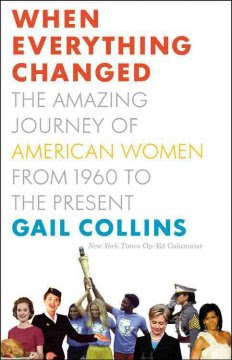
American women

Quite favorably discussed in the 17 December 2009 issue of the New York Review of Books by Cathleen Schine

Sunday, November 8, 2009

Books That Evoke Time and Place

November 7, 2009 - Penelope Lively says these books excel in depicting a particular time and place

1. The Boys' Crusade. By Paul Fussell. Modern Library, 2003 940.5421 F

In 1944, during the run-up to D-Day, two million young American men were given 17 weeks of basic training and shipped to Europe. Over the course of 11 months, from the Normandy landings to Germany's surrender, 135,000 U.S. infantrymen were killed and half a million wounded. Paul Fussell was among the soldiers who came home. He offers a brief, selective and forceful account of that period in "The Boys' Crusade"— and boys is what they largely were. The jacket of my copy shows the face of what one can only see as a child, swamped by his helmet. The book makes liberal use of eye-witness quotation—one soldier describes finding German corpses, "gray teeth, gray hands, worn boots, no identities . . . dead meat, nothing to grieve," and being "stupefied by the death we'd breathed"—an effect that plunges the reader into specific actions and the day-by-day routines of combat. But "The Boys' Crusade" also evokes the outlook of those teenagers—their blithe fidelity to the idea of America as the best and only modern country in the world, and their rapid exposure to the grim realities of an annihilating war.

2. The Last September. By Elizabeth Bowen. The Dial Press, 1929. FIC Bowen

This early novel by Elizabeth Bowen (1899-1973) is set in September 1920, at one of the "great houses" of the Anglo-Irish landowning Protestant families in southern Ireland. The central figure is Lois, a teenager staying on the estate, called Danielstown, with her aunt and uncle. There are tennis parties and dances—Lois loves a British officer from the nearby army station. But behind the story of this happy, innocent girl lurks another one: Ireland is in the midst of violent turmoil—guerrilla conflict between Irish rebels and the British troops who garrison the land. There are ambushes, reprisals, figures glimpsed in the darkness, rumors of arms caches. None of this is made explicit; instead, it surfaces in hints and clues that disturb the autumn program of social events. Until, at the end, there is the stark account of what came soon after: "A fearful scarlet ate up the hard spring darkness."

3. A Year in the Life of William Shakespeare. By James Shapiro. HarperCollins, 2005 822.33 Shakespeare S

James Shapiro places Shakespeare and his plays in their historical context, demonstrating how a yearlong burst of creative activity in 1599—"Henry V," "Julius Caesar," "As You Like It," the first draft of "Hamlet"—was prompted and fueled by what was actually happening at the time. England was threatened by Spain and its armada (possibly inspiring the "jittery soldiers" early in "Hamlet"), for instance, and Queen Elizabeth's favorite, the Earl of Essex, was pursuing a disastrous campaign to put down an Irish insurrection ("Henry V" mentions a general "from Ireland coming, / Bring rebellion broached on his sword"). The aging Elizabeth, with no successor waiting, feared assassination; "Julius Caesar" depicted the murder of a ruler. By finding public concerns reflected in the plays that Shakespeare was writing, Shapiro cunningly carries readers back to a single year and shows an extraordinary mind at work.

4. The Common Stream. By Rowland Parker. Holt, Rinehart & Winston, 1975. 942.0657 P

Rowland Parker's publication of "The Common Stream" more than three decades ago was a pioneering instance of what is now known as micro-history. Parker was not a professional historian; he lived in the village of Foxton in eastern England and became fascinated by the visible presence of the past all around him. He walked, dug, ferreted in archives and eventually produced this remarkable reconstruction of how people had lived in one small part of the world for 2,000 years. The presence of water determined the beginnings of settlement, hence "the common stream" of the book's title. National events intruded on Foxton: A Roman villa was burned down by what we would now call insurgents; the Black Death devastated the area; the English Civil War made partisan demands on the populace. But the village's story is of persons and of families—individual homes traced, their furnishings deduced from the content of wills. In Parker's telling, Foxton springs to life, century by century.

5. The Shorter Pepys. By Samuel Pepys. Penguin Classics, 1993. Biography B Pepys

"Up, and to the office . . ." So far, so 21st century, but Samuel Pepys's office was of course that of the British Navy Board in the 1660s. His expansive, vivid diaries, published in several editions since they first appeared in 1825, are one of the most immediate and valuable accounts that we have of the habits and outlook of the mid-17th century, let alone the habits and outlook of a remarkable man. Pepys was clever, ambitious and wonderfully indiscreet. At one extreme, the diaries are an insight into the operation of the British navy and the labyrinthine politics of the times; at the other, they are a funny and candid portrait of Pepys's own family life, his incessant pursuit of women, his fractious relationship with his young wife. They also provide close-up accounts of the Fire of London and the Great Plague, presenting as well an enthralling picture of what it was like to live through it all as a privileged Londoner.

—Ms. Lively is the author of "Moon Tiger" and other novels. Her latest, "Family Album," has just been published by Viking.

Thursday, November 5, 2009

Googled

Auletta, Ken. (2009). Googled: the end of the world as we know it. New York : Penguin Press.


In "Googled," New Yorker writer Ken Auletta tells the familiar story of the company's rapid transformation from Silicon Valley start-up to global corporation. As expected, we hear about the young Rollerblading employees at Google's Mountain View, Calif., headquarters, with its massage rooms, pool tables and free meals. But thanks to the unusual degree of access that the company granted the author—and thanks to his sharp eye—"Googled" also presents interesting new details. The book describes, for instance, Google's close relationship with former Vice President Al Gore—during a meeting with him, back in his hirsute phase after leaving office, Google executives showed their solidarity by donning fake beards.

Many companies and people are worried abouit the behemoth that is this company.


In contrast to all this corporate anxiety, consumers so far have been upbeat about the extraordinary power that Google wields. As Mr. Brin explains, Google's importance in people's lives comes from "determining what information they get to look at." Lawrence Lessig, who was an expert in the Microsoft antitrust case (and is now a professor at Harvard Law School), tells Mr. Auletta that Google will soon be more powerful than Microsoft ever was, since primacy in search gives the company unprecedented control over commerce and content.

Determining is a powerful word.

Google's favor turned Wikipedia into the world's leading reference source, but a few algorithm tweaks would easily send that torrent of traffic elsewhere. Mr. Lessig says that, for the moment, we take comfort from the fact that Google has been led by "good guys." But then he asks: "Why do we expect them to be good guys from now until the end of time?"

A tweak in the algorithm made Wikipedia be the top result in many searches.

Mr. Auletta notes that many successful companies have appeared "impregnable"—until they didn't. IBM once had a 70% share of the massive mainframe computer market. Then came antitrust action and the personal computer. A company expanding into as many arenas as Google is will almost certainly "wake up the bears," as Verizon Chairman and CEO Ivan Seidenberg puts it.

Problems for Google might lie beyond the horizon, but the immediate future promises more success: Google is well-positioned for the transition to "cloud computing," where software and data are stored online rather than on personal computers. Mr. Schmidt says that cloud computing will be "the defining technological shift of our generation." Accordingly, Google's greatest value creation probably still lies ahead.

Denialism


Specter, Michael. (2009). Denialism: how irrational thinking hinders scientific progress, harms the planet, and threatens our lives. New York: Penguin Press.

Excerpt: ‘Denialism’

“I always say that electricity is a fantastic invention,” the British economist Michael Lipton once told Michael Specter, whose bristling new book, “Denialism,” explores the dangerous ways in which scientific progress can be misunderstood. “But if the first two products had been the electric chair and the cattle prod,” Mr. Lipton continued, “I doubt that most consumers would have seen the point.”

The term “denialism,” used by Mr. Specter as an all-purpose, pop-sci buzzword, is defined by him as what happens “when an entire segment of society, often struggling with the trauma of change, turns away from reality in favor of a more comfortable lie.”

Creationism a prime example.

And whatever the merits of organic farming for societies that can afford it, what happens in places where food, land or water are scarce? There is a case to be made for agricultural methods that make the most efficient use of new technologies, and thus for genetically engineered crops that produce increased yields. But these are widely derided as Frankenfoods. Their ability to scare people and trigger blanket resistance is one of this book’s foremost illustrations of denialism in action.

It is people from societies with plenty that rail against genetically modified foods.

Thursday, October 29, 2009

Athens School

Kagan, Donald. (2009).
Thucydides: The Reinvention of History
Viking, 257 pages, $26.95


Only because of Thucydides' "History of the Peloponnesian War"—with his radical claims of exercising a new rationality and, most grandiloquently, of writing a "thing for all time"—did a typically messy military contest based on money, influence, bloody-mindedness and happenstance become interpreted and reinterpreted as though it were a religious revelation. Communists and anticommunists, leftists and neocons, anti-imperialists and empire builders have all fought to recruit the great Athenian as their ally.

Donald Kagan, a veteran Yale professor of classics and ancient history, has himself taken part in these arguments for almost a half-century. His own four-volume history of the Peloponnesian War is a classic of modern scholarship. Now, with "Thucydides: The Reinvention of History," Mr. Kagan has produced what reads like the last word on the man, a nuanced and subtle account of a subject that has so often been treated in a spirit of high partisanship.

Mr. Kagan has no time for worshiping Thucydides' eternal rational purity, as students were once so rigorously taught to do. But he is not the first skeptic on this front: Scholars have insisted for the past quarter-century—most recently in Simon Hornblower's magisterial three-volume "A Commentary on Thucydides," completed earlier this year—that Thucydides was a master of drama as much as of science, a master of stadium rhetoric as much as of empirical reporting. It is dangerous to see him, as Mr. Kagan puts it, as "a disembodied mind." He was "a passionate individual" writing about "the greatness of his city and its destruction."

Mr. Kagan finishes up with an observation that foreign-policy debaters would do well to keep in mind: "A hegemonic state may gain power by having allies useful in war, but reliance on those states may compel the hegemonic power to go to war against its own interests." The disastrous misadventure of the Athenians in Sicily began, Mr. Kagan writes, with "the entreaties of their small, far-off allies." As he notes, it was Bismarck who once said that in a world of competing alliances it is essential "to be the rider, not the horse."

Thucydides' "History," says Mr. Kagan, shows "how difficult an assignment" the rider faces. His own book is a valuable guide to the ways in which the Peloponnesian War can—and cannot—be used to guide modern thinking.