
Showing posts with label Russia. Show all posts
Showing posts with label Russia. Show all posts
Wednesday, March 23, 2011
Possessed

Tuesday, August 17, 2010
Moscow Express

Reviewed by Olen Steinhauer in NY Times Book review section.
Saturday, June 12, 2010

New York: Viking .
Various links include an event at the Woodrow Wilson Center, a segment on BookTV,
Thursday, April 15, 2010
Hubris of a Man Who Thought He Was Napoleon
This review of the book Russia against Napoleon in the Times seems to take the same tack as the reviewer in the Journal (cf. post below) points out as being erroneous. This reviewer is John Steele Gordon. His history of the national debt, “Hamilton’s Blessing,” has just been released in a updated edition by Walker & Company.
In the Journal review, Jennifer Siegel states: In Mr. Lieven's eyes, this story has two great heroes, and neither is Mikhail Kutuzov, the Russian general lionized by Tolstoy and, later, Stalin. Mr. Lieven praises Kutuzov, the commander in chief of the Russian forces, for his courage, skillful soldiering and mastery of public relations, but the author does not consider him the military genius that tradition has trained us to see. Rather it is the czar, Alexander I, and the historically undervalued Mikhail Barclay de Tolly, minister of war and the commander of the Russian forces before and after Kutuzov, who inspire Mr. Lieven's admiration.
In the Journal review, Jennifer Siegel states: In Mr. Lieven's eyes, this story has two great heroes, and neither is Mikhail Kutuzov, the Russian general lionized by Tolstoy and, later, Stalin. Mr. Lieven praises Kutuzov, the commander in chief of the Russian forces, for his courage, skillful soldiering and mastery of public relations, but the author does not consider him the military genius that tradition has trained us to see. Rather it is the czar, Alexander I, and the historically undervalued Mikhail Barclay de Tolly, minister of war and the commander of the Russian forces before and after Kutuzov, who inspire Mr. Lieven's admiration.
In this review, Gordon states: With greatly inferior forces, Russia could not afford to confront Napoleon head on. Instead, the Russian commander, Mikhail Kutuzov, of necessity adopted Fabian tactics, harassing the invaders but avoiding pitched battle when possible. The one really big battle, Borodino, was more or less a draw, after Napoleon gave up personal command for reasons never satisfactorily explained. On Sept. 14 Moscow fell to Napoleon, and he sent peace overtures to Alexander, thinking the czar had no option but to negotiate. The Russians stalled and hinted but never gave a firm answer, seeking to keep Napoleon in Moscow as long as possible. On Oct. 19, with the czar still dawdling, French food supplies dwindling rapidly, and the Russian winter closing in, Napoleon had no choice but to begin withdrawal.
Kutuzov is painted as decisive, Alexander as indecisive. Stein sees it differently. Nonetheless, both priase the book.
Moscow on the Seine
How a czar and his army saved Europe from France's Grande Armée.
After two years of nearly continuous fighting against Napoleon in the longest campaign in European history — a campaign that had marched the Russian army from Vilna in the west, eastward to Moscow, then all the way to Paris — the end to the conflict seemed for the first time to be as close at hand as the city rising on the horizon.
Dominic Lieven relates the tale of this campaign with masterly skill in "Russia Against Napoleon." It is a story that students of European history and admirers of Russian literary classics think they know well: Napoleon invaded Russia in 1812 and stayed too long; was trapped by the Russian winter and stymied by the nationalistic heroism of the Russian people; destroyed his Grande Armée in an ill-timed retreat across the snow-covered, war-ravaged fields; and was slowly pushed back to Paris by the re-formed and newly invigorated coalition of Great Powers (Britain, Austria, Prussia and Russia). In 1814, as every schoolchild once knew, Napoleon was dispatched to Elba, leaving open the possibility that Russia would dominate the recently liberated Continent.
Mr. Lieven, a professor of Russian history at the London School of Economics, paints a far more textured picture of Russia's crucial role in halting Napoleon's advance and containing France within its historic borders. "Russia Against Napoleon" is informed by Russian sources and focuses not only on Russia's oft-praised people but also on the country's oft-underappreciated leadership in the early 19th century.
In Mr. Lieven's eyes, this story has two great heroes, and neither is Mikhail Kutuzov, the Russian general lionized by Tolstoy and, later, Stalin. Mr. Lieven praises Kutuzov, the commander in chief of the Russian forces, for his courage, skillful soldiering and mastery of public relations, but the author does not consider him the military genius that tradition has trained us to see. Rather it is the czar, Alexander I, and the historically undervalued Mikhail Barclay de Tolly, minister of war and the commander of the Russian forces before and after Kutuzov, who inspire Mr. Lieven's admiration.

Russia Against Napoleon 940.2709 L
Dominic Lieven
Viking, 618 pages, $35.95
Barclay de Tolly was responsible for Russia's successful strategy of "deep retreat," which he had recommended as early as 1810. The idea was to lure the French far into Russia's heartland, stretching out their supply lines and making a potential French retreat crippling and costly. He was under constant criticism in his day for abandoning Russian ground to the French in 1812 without any real resistance, and he was under perpetual suspicion from the "Old Russian" camp at court and in the army because of his "foreign origins"—even though his family, of Scottish descent, had lived in the Russian Empire since the mid-17th century. In Mr. Lieven's hands, Barclay de Tolly comes across as tireless, dedicated, brave and strategically sound.
And Czar Alexander, often portrayed as unpredictable and ungrounded, frequently shows good leadership and diplomatic finesse in Mr. Lieven's telling. Despite ... constraints, Alexander proved an effective wartime leader, particularly after 1812, when the conflict moved out of Russia and diplomacy became paramount. He recognized that only a peace signed in Paris could guarantee the restoration of order in Europe and the security of Russia; but he also saw that Russia alone could never defeat the French forces. A victory over Napoleon was possible only because Alexander managed to form a grand alliance and keep it intact. This coalition-building, Mr. Lieven argues, was the czar's greatest achievement.
Russia's triumph is also a story of logistics, supplies and, above all, the horse. The country's leaders mobilized what Mr. Lieven calls "the sinews of Russian power": its vast population (although much smaller than the combined numbers at Napoleon's disposal); its outstanding and plentiful horse stock; its arms manufacturing; and even the sometimes unstable Russian economy. Of these, it is the horse, and Russia's ability to mobilize its light cavalry to harass Napoleon's rearguard as it retreated across the great European plain, that receives the greatest attention in "Russia Against Napoleon." Coming in a close second to the horse in significance were the victuallers who managed to feed and supply more than a half-million troops during the two-year campaign.
Mr. Lieven ends by arguing that in 1814, as in the present day, the security of Russia and the security of Europe were interdependent. True enough, but he also shows in this absorbing book that the defeat of Napoleon hinged on the resources, leadership and sacrifice of the Russian empire.
Ms. Siegel is a history professor at Ohio State University.
After two years of nearly continuous fighting against Napoleon in the longest campaign in European history — a campaign that had marched the Russian army from Vilna in the west, eastward to Moscow, then all the way to Paris — the end to the conflict seemed for the first time to be as close at hand as the city rising on the horizon.
Dominic Lieven relates the tale of this campaign with masterly skill in "Russia Against Napoleon." It is a story that students of European history and admirers of Russian literary classics think they know well: Napoleon invaded Russia in 1812 and stayed too long; was trapped by the Russian winter and stymied by the nationalistic heroism of the Russian people; destroyed his Grande Armée in an ill-timed retreat across the snow-covered, war-ravaged fields; and was slowly pushed back to Paris by the re-formed and newly invigorated coalition of Great Powers (Britain, Austria, Prussia and Russia). In 1814, as every schoolchild once knew, Napoleon was dispatched to Elba, leaving open the possibility that Russia would dominate the recently liberated Continent.
Mr. Lieven, a professor of Russian history at the London School of Economics, paints a far more textured picture of Russia's crucial role in halting Napoleon's advance and containing France within its historic borders. "Russia Against Napoleon" is informed by Russian sources and focuses not only on Russia's oft-praised people but also on the country's oft-underappreciated leadership in the early 19th century.
In Mr. Lieven's eyes, this story has two great heroes, and neither is Mikhail Kutuzov, the Russian general lionized by Tolstoy and, later, Stalin. Mr. Lieven praises Kutuzov, the commander in chief of the Russian forces, for his courage, skillful soldiering and mastery of public relations, but the author does not consider him the military genius that tradition has trained us to see. Rather it is the czar, Alexander I, and the historically undervalued Mikhail Barclay de Tolly, minister of war and the commander of the Russian forces before and after Kutuzov, who inspire Mr. Lieven's admiration.

Russia Against Napoleon 940.2709 L
Dominic Lieven
Viking, 618 pages, $35.95
Barclay de Tolly was responsible for Russia's successful strategy of "deep retreat," which he had recommended as early as 1810. The idea was to lure the French far into Russia's heartland, stretching out their supply lines and making a potential French retreat crippling and costly. He was under constant criticism in his day for abandoning Russian ground to the French in 1812 without any real resistance, and he was under perpetual suspicion from the "Old Russian" camp at court and in the army because of his "foreign origins"—even though his family, of Scottish descent, had lived in the Russian Empire since the mid-17th century. In Mr. Lieven's hands, Barclay de Tolly comes across as tireless, dedicated, brave and strategically sound.
And Czar Alexander, often portrayed as unpredictable and ungrounded, frequently shows good leadership and diplomatic finesse in Mr. Lieven's telling. Despite ... constraints, Alexander proved an effective wartime leader, particularly after 1812, when the conflict moved out of Russia and diplomacy became paramount. He recognized that only a peace signed in Paris could guarantee the restoration of order in Europe and the security of Russia; but he also saw that Russia alone could never defeat the French forces. A victory over Napoleon was possible only because Alexander managed to form a grand alliance and keep it intact. This coalition-building, Mr. Lieven argues, was the czar's greatest achievement.
Russia's triumph is also a story of logistics, supplies and, above all, the horse. The country's leaders mobilized what Mr. Lieven calls "the sinews of Russian power": its vast population (although much smaller than the combined numbers at Napoleon's disposal); its outstanding and plentiful horse stock; its arms manufacturing; and even the sometimes unstable Russian economy. Of these, it is the horse, and Russia's ability to mobilize its light cavalry to harass Napoleon's rearguard as it retreated across the great European plain, that receives the greatest attention in "Russia Against Napoleon." Coming in a close second to the horse in significance were the victuallers who managed to feed and supply more than a half-million troops during the two-year campaign.
Mr. Lieven ends by arguing that in 1814, as in the present day, the security of Russia and the security of Europe were interdependent. True enough, but he also shows in this absorbing book that the defeat of Napoleon hinged on the resources, leadership and sacrifice of the Russian empire.
Ms. Siegel is a history professor at Ohio State University.
Tuesday, March 9, 2010
The Possessed
Adventures in Russian Literature: Elif Batuman's debut book, "The Possessed," is a sometimes tongue-in-cheek account of her study of Russian literature. (WSJ)
Tolstoy & Co. as Objects of Obsession (NYT)
Tolstoy & Co. as Objects of Obsession (NYT)
Saturday, February 6, 2010
Tuesday, February 2, 2010
Thursday, January 14, 2010
Feature films as history
Selected papers from a conference sponsored by Zentrum für Interdisziplinäre Forschung, University of Bielefeld held in 1979.
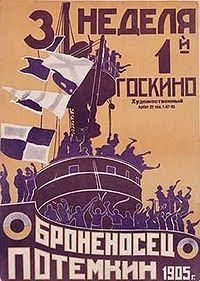
Cover of book shows "Jacket illustration of Battleship Potemkin poster from the National Film Archive, London" of a sailor with the ship's name on the headband of his cap.
The book contains papers on:
1. Introduction: Feature films as history
2. Battleship Potemkin
3. Germany and France in 1920s
4. Jean Renoir
5. British films, 1935-1947
6. Film censorship in Liberal England
7. Casablanca, Tennessee Johnson and The Negro Soldier
8. Hollywood fights anti-Semitism

The book contains papers on:
1. Introduction: Feature films as history
2. Battleship Potemkin
3. Germany and France in 1920s
4. Jean Renoir
5. British films, 1935-1947
6. Film censorship in Liberal England
7. Casablanca, Tennessee Johnson and The Negro Soldier
8. Hollywood fights anti-Semitism
Saturday, October 17, 2009
First Circle
 Excerpt: 'In the First Circle'
I well remember reading this book, and others, by Solzhenitsyn. I greatly liked this and Cancer Ward.
It has taken a half-century for English-language readers to receive the definitive text of "In the First Circle," the best novel by one of the greatest authors of our time. Such is the fate of art created under a totalitarian regime. But now it is finally available in the West as the author envisioned it. The English translator is Harry T. Willetts, renowned for combining fidelity to Aleksandr Solzhenitsyn's rich, complex Russian with supple equivalents in English prose and the only person Solzhenitsyn fully trusted to render his fiction into English.
Solzhenitsyn wrote the book under exceptionally difficult circumstances. In 1953, as he was about to emerge from eight years in the gulag, the Soviet prison-camp system, he was diagnosed with cancer. Consigned to internal exile in Kazakhstan, he found work as a schoolteacher but devoted every spare moment to writing. In 1958, he completed the first draft of "In the First Circle," a novel, set during Stalin's rule, about the effects of incarceration and forced labor on the minds and souls of innocent and intelligent men. He immediately put it through two revisions.
"In the First Circle" is the first work by Solzhenitsyn to go to press in English since he died last year at age 89. A major writer's death fosters reflection on his overall achievement, so this is the perfect time to reconsider the novel now that it is finally available to us as the author intended. A literary classic is defined as a book still read a century after appearing. On that basis one might say that the book has already had a 40-year head start on fulfilling that definition, given the acclaim with which the bowdlerized text has been received since its appearance in the West in 1968.
An intriguing intimation of the prospects for this version comes from the Russian experience with the canonical text. In 2006 a Russian television network presented serializations of classic Russian novels by Dostoyevsky, Tolstoy, Pasternak, Bulgakov and Solzhenitsyn. Fifteen million viewers tuned in to each installment of "In the First Circle."
Wednesday, May 20, 2009
Utomlennye solntsem
 Ah, this was a great film. Saw it quite some months ago, and really liked it. Island Trees Library called to interloan it for one of their patrons.
In Stalinist Russia a decorated Revolutionary War hero shares with his wife and child a loving, passionate family life. He is respected and admired by his neighbors. There is an eccentric family, beautiful countryside, and political paranoia.
Nikita Mikhalkov directs and stars as Colonel S. Kotov, a hero of the Revolution, who is spending the summer in the country with his young daughter (Mikhalkov's real-life daughter), his wife and her eccentric family. But when his wife's childhood love suddenly appears, the idyllic summer day takes a surprising turn. A lyrical film filled with beauty and warmth, it is also an indelible account of a man dedicated to family and fatherland, cruelly destroyed by political paranoia.
Film-making at its best.
Tuesday, April 28, 2009
A woman in Jerusalem
 Yehoshua, A. (2006). A Woman in Jerusalem. New York: Harcourt, Inc. Translated by H. Halkin.
I didn't like it all that much, but others did. Travels with Yulia, an NYT review, praised it.
Tuesday, April 14, 2009
Gogol caught in Tug of Love
Born in present-day Ukraine, then part of the Russian Empire, Gogol later lived in St. Petersburg and wrote in Russian; yet his first published works, the short-story collections "Evenings on a Farm Near Dikanka" (1831-32) and "Mirgorod" (1835), were steeped in the culture, folklore and language of the Ukrainian countryside. His later writings, notably the 1842 epic masterpiece "Dead Souls," shifted to Russian settings and sometimes evidenced his growing Russian nationalism. A much-quoted passage in "Dead Souls" compares Russia to a speeding troika driven by a mysterious force: "Everything on earth flies past, and other nations and states glance warily as they step aside and give her the right of way."


Sunday, May 25, 2008
Wonderful Film(s)
Burnt by the Sun - a Russian film. Picked it off the shelves at Hewlett.Woodmere Library rather randomly (in the last several weeks, and more, I've been looking for the Foreign Language sticker on the spine of DVD or even VC films, starting out looking for films in Spanish, progressing to other languages, too) -- and came up with a couple of gems.
Last night I watched Offside, an Iranian film about women who want to go to Tehran Stadium to watch Iran vs. Bahrain, the qualifying match for the 2006 World Cup. It had a lot of talking -- in fact, mostly talking, but it was quite good: poignant (knowing that women, as the film shows, have a subordinate (to say it kindly) position in Persian society), funny, absorbing.
Utomlyonnye solntsem is the anglicised title of Burnt by the Sun (Утомленные солнцем in Cyrillic). It was excellent. The story takes place in 1936. A revolutionary hero is enjoying an idyllic time in the country of the family of his younger wife. Together with their 8 year old (or so) daughter, they have a loving family core. In the house are also the woman's grandmother and various other family members.
The relationship between father and daughter is expressed beautifully. Tender, loving, it oozes a love I do not think I have seen as well acted ever before; the little girl was amazing. Too, the relationship between husband and wife drips love, yet shows an underlying layer that shows the complexity of sexual-love relationships between women and men.
There is zany action (a Can-Can with three, maybe four, generations of females frolicking and kicking their legs, for one), there are zany characters (a servant who guards her chest and buttocks with a silver tray to protect said anatomy from pinches and slaps). Young pioneers and gas-attack-protecting civil defense groups add to the multi-tiered plot.
Under all this, a political angle is developed. Mytia, a former lover of the mother, Marusia, shows up and add a strong dose of tension. In order, it becomes clear there is tension. Soon it is made clear that Mytia is not just a weird one, not just an eccentric, but the one who injects Stalin into the middle of the picture (literally).
All along there are references made to balloons being constructed for the glory of the Motherland and Comrade Stalin. And a glowing ball shows up; its symbolism is not entirely clear, but clear guesses ca easily be made.
What makes this kind of film starkly different from many, I'd say most, the overwhelming majority of Hollywood films, is that the acting is subtle and intense, the story and plot are strong and deep, and the razz-ma-tazz is minor: there are few special effects; the eroticism of the love between Mariusia and Kotov leaves a good deal to the imagination, and the sweep is grand.
In the end, Stalin's terror is starkly clear -- yet, again, it is not served with the heavy hand that is so prevalent in Hollywood products. A beautiful film; I gave it a 9 (maybe and a quarter, even a half).
Last night I watched Offside, an Iranian film about women who want to go to Tehran Stadium to watch Iran vs. Bahrain, the qualifying match for the 2006 World Cup. It had a lot of talking -- in fact, mostly talking, but it was quite good: poignant (knowing that women, as the film shows, have a subordinate (to say it kindly) position in Persian society), funny, absorbing.
Utomlyonnye solntsem is the anglicised title of Burnt by the Sun (Утомленные солнцем in Cyrillic). It was excellent. The story takes place in 1936. A revolutionary hero is enjoying an idyllic time in the country of the family of his younger wife. Together with their 8 year old (or so) daughter, they have a loving family core. In the house are also the woman's grandmother and various other family members.
The relationship between father and daughter is expressed beautifully. Tender, loving, it oozes a love I do not think I have seen as well acted ever before; the little girl was amazing. Too, the relationship between husband and wife drips love, yet shows an underlying layer that shows the complexity of sexual-love relationships between women and men.
There is zany action (a Can-Can with three, maybe four, generations of females frolicking and kicking their legs, for one), there are zany characters (a servant who guards her chest and buttocks with a silver tray to protect said anatomy from pinches and slaps). Young pioneers and gas-attack-protecting civil defense groups add to the multi-tiered plot.
Under all this, a political angle is developed. Mytia, a former lover of the mother, Marusia, shows up and add a strong dose of tension. In order, it becomes clear there is tension. Soon it is made clear that Mytia is not just a weird one, not just an eccentric, but the one who injects Stalin into the middle of the picture (literally).
All along there are references made to balloons being constructed for the glory of the Motherland and Comrade Stalin. And a glowing ball shows up; its symbolism is not entirely clear, but clear guesses ca easily be made.
What makes this kind of film starkly different from many, I'd say most, the overwhelming majority of Hollywood films, is that the acting is subtle and intense, the story and plot are strong and deep, and the razz-ma-tazz is minor: there are few special effects; the eroticism of the love between Mariusia and Kotov leaves a good deal to the imagination, and the sweep is grand.
In the end, Stalin's terror is starkly clear -- yet, again, it is not served with the heavy hand that is so prevalent in Hollywood products. A beautiful film; I gave it a 9 (maybe and a quarter, even a half).
Subscribe to:
Posts (Atom)