Thursday, May 14, 2009

Tunney

A wonderful book. Well written, with a fluid narrative, it does a historical justice to a champion who was not very popular during his lifetime.

Growing up poor in the West Village in early-20th century New York City, an Irish Catholic, Tunney was given boxing gloves by his father to protect himself from bullies. Soon young Gene became a good boxer, and his skill deterred bullies from picking on him. He also learned to love to read, and his bookishness became a point of contention.

One of Jack Dempsey's corner men is supposed to have said to the then-champ, "He reads books," as a way to disparage the challenger. Tunney beat Dempsey.

He also lectured on Shakespeare's Troilus and Cressida when invited to speak before a class of Yale students. And became friends with G.B. Shaw.

Really a fascinating man. He married an heiress of Carnegie's partner's fortune, became a Connecticut gentleman farmer, and lived until age 81. His wife, Polly Lauder Tunney, lived to be 100, and died on April 12, 2008. Jack Cavanaugh, who wrote the book, wrote her obituary in the Times.

Polly Lauder Tunney and Gene Tunney after marrying in 1928.


Wednesday, May 13, 2009

Eiffel's tower

One of two books on the New Book cart at Information Desk today that intrigued me:

Eiffel's Tower, by Jill Jonnes. The book, of course, has its own website. In it, some pictures are shown, including one I really like: the tower being built.


The Eiffel Tower grows, reads the caption, December 7, 1887. Credit is given to Otis Archives.

Hype Igoe

What a great name. Found him on the pages of the book I'm currently reading, Tunney: boxing's brainiest champ and his upset of the great Jack Dempsey, by Jack Cavanaugh.

Googling the name Hype Igoe led me to a blog, Yesterday's Papers, of a cartoonist

Monday, May 11, 2009

A League of His Own

Branch Rickey in 1962.
Rickey is one of the really fascinating characters in baseball history. He brought Jackie Robinson into Brooklyn, into baseball, and forced the issue of race. He was a complex character


Occupied France: 5 Books

1. Occupation 944.0816 O
By Ian Ousby
St. Martin's Press, 1997

Nothing can be more degrading for a nation than to be occupied. In the case of France, the German Occupation even extended to the ancient practice of hauling people off to be slaves -- in this case as forced laborers in German factories. Ian Ousby's "Occupation" is an outstanding introduction to this horrible-fascinating subject. The author's apparent disqualifications -- not a historian and not a scholar of French history -- are the very qualities that make him an excellent guide for the general reader who knows nothing about the subject and wants lucid answers to the simple questions: What really happened, what was heroic, what was shameful, and in what proportions did they flourish in the same soil and why?


2. Vichy France 320.944 P and 944.0816 P *
By Robert O. Paxton
Knopf, 1972

Nearly four decades ago, Robert O. Paxton's "Vichy France" touched off what came to be regarded as a sort of Copernican revolution in studies of French collaboration. Paxton was the first to show that the collaborationist policy of the French government in occupied France was voluntary -- even, as with Vichy's anti-Semitism, anticipating and going further than the Germans had asked. Paxton's classic inspired young French scholars, opening the way to a flood of works that seems to widen with the passage of time. Justice done? Far from it. French television regularly broadcasts fictional stories of the Resistance but rarely one of collaboration. A year ago, President Nicolas Sarkozy said in an address to his nation: "The true France was not at Vichy [and] never collaborated." Official myth and historic fact continue to live side by side. And shame persists.

3. France: The Dark Years, 1940-1944 [also gets differing Deweys: 944.0816 J, 940.5421 J]
By Julian Jackson
Oxford, 2001

This is the fullest one-volume account of both the high politics of Vichy and the daily life of the French populace, written by Julian Jackson, an eminent authority on the Occupation. One of the book's many virtues is the honest way it explores the subtleties and complexities of "collaborationism." Was a mayor, honest and efficient before the Occupation, a collaborator for continuing to be an honest and efficient mayor under the Nazis? Was the owner of a factory making equipment for the Germans guilty of collaboration for keeping his plant going so that his employees could earn money to buy food? "France: The Dark Years, 1940-1944" is densely packed with fact and analysis and may be too detailed for some readers, but it is an indispensable reference work for anyone interested in the topic.

4. Paris in the Third Reich
By David Pryce-Jones
Holt, Rinehart & Winston, 1981

After having been stranded in 1940 in France as a 4-year-old, David Pryce-Jones returned to the country many years later to write this eminently readable and marvelously illustrated large-format book about daily life in the capital during wartime. The text concludes with a number of historically valuable interviews with German Occupation officials and some key collaborators. The book includes more than 100 photographs, many of them in color, rare at the time. But reader beware: Some of the photos are by André Zucca, a collaborationist photographer for Signal, a magazine established by Nazi propaganda minister Joseph Goebbels to convey the idea that occupied France was a happy place. An exhibition in Paris last year of 250 of these photographs created a scandal, demonstrating how the Occupation remains a raw subject to this day.

5. Occupied France
By H.R. Kedward
Blackwell, 1985

In a mere 80 pages, studded with shrewd observations distilled from years of study, H.R. Kedward, now an emeritus professor at the University of Sussex, takes the reader through the Occupation at a gallop. Collaboration and resistance began the same day -- the moment the armistice was signed on June 22, 1940 -- and Kedward shows that from the start, the two responses to German rule had myriad meanings and myriad practitioners. Blacks and whites shade into gray in this account, but true villains and true heroes remain. Resistance, whether refusing to speak to a German on the street or committing acts of violent sabotage, may often have been ineffective, but it was a vital help to Allied forces come D-Day. The central lesson of "Occupied France" and the other titles is simple. Collaboration -- like appeasement before it -- failed totally because it willfully misread Hitler's intentions.

Mr. Spotts is the author of "The Shameful Peace: How French Artists and Intellectuals Survived the Occupation" (Yale University Press, 2009)

*: 320.944 P and 944.0816 P
An interesting commentary on libraries and cataloguing. Same book is classified in two different ways: 320 is political science; 944 is General history of Europe; France & Monaco.

Sunday, May 3, 2009

Friendlyvision

"Friendlyvision" B Friendly E
By Ralph Engelman
Columbia University, 424 pages, $34.50

Saturday, May 2, 2009

Shawshank Redemption


King, Stephen. Different seasons. New York: Viking Press, 1982.

Contents: Rita Hayworth and Shawshank redemption
Apt pupil
The body
The breathing method.
Genre: Horror tales.


Wikipedia has an article about the film:

The Shawshank Redemption is a 1994 American prison drama film, written and directed by Frank Darabont, based on the Stephen King novella, Rita Hayworth and Shawshank Redemption. The film stars Tim Robbins as Andrew "Andy" Dufresne and Morgan Freeman as Ellis Boyd "Red" Redding.

The film portrays Andy spending nearly two decades in Shawshank State Prison, a fictional penitentiary in Maine, and his friendship with Red, a fellow inmate. This movie exemplifies the potential gap between initial box office success and ultimate popularity. Despite a lukewarm box office reception that was barely enough to cover its budget, The Shawshank Redemption received favorable reviews from critics and has since enjoyed a remarkable life on cable television, home videotape, DVD and Blu-ray. It continues to be hailed by critics and audiences alike, 15 years after its initial release, and is ranked among the greatest films of all time.

Greatest films of all time.

Friday, May 1, 2009

Catch a fire

Excellent film. Derek Luke is magnificent as Patrick Chamusso, Bonnie Henna does a very good job as Precious, and the film evokes the South Africa of 1980 quite well. A grand film.

The true story of a South African hero's journey to freedom. In the country's turbulent and divided times in the 1980s, Patrick Chamusso is an oil refinery foreman and soccer coach who is apolitical. That is, until he and his wife Precious are jailed. Patrick is stunned into action against the country's oppressive reigning system, even as police Colonel Nic Vos further insinuates himself into the Chamussos' lives.

Tim Robbins is very good as Vos, and deserves credit for playing such a vicious, despicable character.

Wednesday, April 29, 2009

First Tycoon

The First Tycoon
The Epic Life of Cornelius Vanderbilt
By T. J. Stiles
Illustrated. 719 pages. Alfred A. Knopf. $37.50.

B Vanderbilt S


T. J. Stiles


April 29, 2009
Books of The Times
The Mogul Who Built Corporate America
By DWIGHT GARNER


Cornelius Vanderbilt, the great steamship and then railroad magnate, the man who built the original Grand Central Terminal, was not much of a conversationalist. If a man boasted in his presence, he would say, “That amounts to nothing.” If interrupted while speaking, he would stop talking and not resume the subject. Vanderbilt (1794-1877) didn’t need words. His actions spoke with a brute eloquence.

In this whacking new biography of Vanderbilt, T. J. Stiles, previously the author of a life of Jesse James, demonstrates a brute eloquence of his own. This is a mighty — and mighty confident — work, one that moves with force and conviction and imperious wit through Vanderbilt’s noisy life and times. The book, “The First Tycoon: The Epic Life of Cornelius Vanderbilt,” is full of sharp, unexpected turns. Among the biggest: Mr. Stiles has delivered a revisionist history of American capitalism’s original sinner, the man who inspired the term “robber baron.” He has real sympathy for the old devil.

The phrase “epic life” is a biographical clichĂ©. But it fits Vanderbilt in every regard: force of personality; degrees of ruthlessness, guile and accomplishment; even sheer life span. He was born less than two decades after the end of the Revolutionary War, while Washington was still alive, and he would live long enough not only to play a significant role in the Civil War but also to do business with John D. Rockefeller.

Vanderbilt essentially invented the modern corporation through his purchase and consolidation of New York’s major railroads, and brought, Mr. Stiles says, the American professional and managerial middle class into being. His influence remains so great as to be almost intangible.

As Mr. Stiles writes: “He may have left his most lasting mark in the invisible world, by creating an unseen architecture which later generations of Americans would take for granted.”

How you feel about the “unseen architecture” of American economics and corporate life says a lot about, or even defines, your politics. Mr. Stiles sees both sides of Vanderbilt:

“His admirers saw him as the ultimate meritocrat, the finest example of the common man rising through hard work and ability. ... His critics called him grasping and ruthless, an unelected king who never pretended to rule for his people.” But Mr. Stiles plainly gets a charge out of Vanderbilt’s raw nerve.

Cornelius Vanderbilt grew up on Staten Island, the son of a modest farming family. He attended school for only a few months, developing what Mr. Stiles calls “a lasting contempt for the conventions of written English.” He was born in the right place at the right time.

“Unlike most country folk,” Mr. Stiles writes, “the Vanderbilts lived within sight of the place of the most densely concentrated possibilities in North America: the city of New York.”

As a young man, Vanderbilt began working on ferries and schooners and then, with their increasing popularity in the 1820s and ’30s, steamboats. He made a name for himself in business for his “elbows-out aggressiveness.”

He made a name for himself, too, with his imposing appearance. A contemporary described him as “a man of striking individuality, as straight as an Indian, standing six feet in his stockings and weighing about 200 pounds.” Frugal and abstemious, Vanderbilt had one vice: the constant presence of a lighted or unlighted cigar.

The most flat-out enjoyable sections of “The First Tycoon” are those that deal with New York’s great steamship wars of the first half of the 19th century. Vanderbilt began to build and operate his own fleet, picking up the nickname the Commodore in the process. He engaged in price wars, cutting fares until competitors went out of business or paid him to go away. He slowly developed a chokehold on commerce.

By the late 1840s, Mr. Stiles writes, “almost everyone who traveled between New York and Boston took a Vanderbilt boat or a Vanderbilt train.”

Vanderbilt loved to compete, and to smite his enemies. Mr. Stiles tells of epic steamboat races, much reported in New York’s newspapers, that Vanderbilt took part in and gambled on. His boats ran against other ships up the Hudson nearly as far as West Point, then turned around and roared home. Vanderbilt helped fuel the gold rush, getting his steamships around to San Francisco. He tried to cut a more direct path to the West Coast, a canal through Nicaragua, and there are scenes of stranded steamers here that are straight out of the movie “Fitzcarraldo.” He provided steamships to the Union during the Civil War, including one, fitted out with a special ram, that stared down the Confederate ironclad warship, the Merrimac, keeping it in check for much of the war.

The book’s final sections unpack Vanderbilt’s greatest coup, buying and then consolidating New York’s major railroad lines, using every trick in his arsenal, including the manipulation of stock prices. His wealth became enormous.

“If he had been able to sell all his assets at full market value at the moment of his death,” Mr. Stiles writes, “he would have taken one out of every 20 dollars in circulation.”

Mr. Stiles is clear-eyed about his subject’s nearly amoral rapacity. He writes that Vanderbilt “exacerbated problems that would never be fully solved: a huge disparity in wealth between rich and poor; the concentration of great power in private hands; the fraud and self-serving deception that thrives in an unregulated environment.”

But again and again in “The First Tycoon,” he also defends Vanderbilt against his most vocal detractors and, whenever possible, corrects the historical record when it has portrayed him unfairly. Vanderbilt did not actually say, to give just one example, a line that was used against him at the time: “Law! What do I care about the law?”

Mr. Stiles gets Vanderbilt the man onto paper. He is eloquent on Vanderbilt’s love of horses and horse racing, his tangled relationships with his 13 children and his dabbling in the occult. (About the sĂ©ances Vanderbilt attended, Mr. Stiles writes: “The possibility of mastering even death itself must have been appealing.”)

He is even better on Vanderbilt’s fraught relationship with New York society, which at first shunned him as “illiterate and boorish.”

There are moments in any biography of this size when your eyes are going to glaze over; I certainly did not wish “The First Tycoon” were longer. But I read eagerly and avidly. This is state-of-the-art biography, crisper and more piquant than a 600-page book has any right to be.

Cornelius Vanderbilt emerges clearly in these pages as a man who, as his son-in-law put it, “was determined to have his own way, always, to a greater extent than any man I ever saw.”

Tuesday, April 28, 2009

A woman in Jerusalem

Yehoshua, A. (2006). A Woman in Jerusalem. New York: Harcourt, Inc. Translated by H. Halkin.

I didn't like it all that much, but others did. Travels with Yulia, an NYT review, praised it.

Win a date with Tad Hamilton!

Lightweight; no, less: fluffweight. Cute; too cute.

Monday, April 27, 2009

Birds of America

Cute. Passably good. A little scattered, but worth watching. Surely a much better use of time than watching Collateral.

Sunday, April 26, 2009

A Terrible Splendor

"A Terrible Splendor"
By Marshall Jon Fisher
Crown, 321 pages, $25

Fisher, M., (2009). A Terrible Splendor. New York: Crown


Tennis is not my game, but this seems a wonderful book about much more than tennis.


The case for the greatest match or game or championship ever played – that staple of bar arguments – inevitably has to be based on something more than simple drama on the field, court, course or ice. The confrontation between two opponents should also speak in a larger way about the world at that moment. A lot of tennis has been played since 1937 – and for pure athletic drama, nothing could top the 1980 Wimbledon final between Bjorn Borg and John McEnroe – but in Marshall Jon Fisher's rich and rewarding "A Terrible Splendor," he makes a strong claim to greatest-ever status for Budge vs. Cramm in the Davis Cup.

on July 20, the players who had faced each other in the final there [of Wimbledon] were back again. Don Budge, a 22-year-old American, and Baron Gottfried von Cramm of Germany, 28, were scheduled to meet in the sport's premiere team competition, the Davis Cup.


The English were rooting for Cramm: it'd be easier for England to defeat Germany than the US.

Cramm had other supporters that July day, but their backing sent a chill through him: Nazi officials sitting in the royal box expected him to win for the glory of the fatherland. A victory would also reassure them about his patriotism. The German star had refused to join the Nazi Party, and in April he had been interrogated by the Gestapo regarding allegations of homosexual activity – a crime in Nazi Germany. The handsome, aristocratic Baron von Cramm desperately needed to redeem himself against the homely young American who had learned to play tennis on public courts in California. Cramm's prospects were not encouraging: In the Wimbledon final, Budge had beaten him easily in straight sets.

Cramm's story provides the emotional ballast of "A Terrible Splendor." In contrast to Budge, whose father was a truck driver, Cramm was a dashing blond member of the German aristocracy, single-mindedly pursuing the game on the court of the family's summer castle and later at Berlin's exclusive Rot-Weiss Club. "Every year that von Cramm steps onto the Centre Court at Wimbledon," reported one observer, "a few hundred young women sit a little straighter and forget about their escorts."

In addition to the two on-court competitors, a third player looms large in "A Terrible Splendor": Bill Tilden, a tennis superstar of the 1920s who had done much to popularize the sport in America but who had also long feuded with the tennis bureaucracy in the U.S. The American tennis establishment, Mr. Fisher says, was leery of Tilden's off-court flamboyance and rumors about his sexual tendencies. (In the 1940s, Tilden was jailed twice on morals charges involving teenage boys.) In 1937, Tilden was unofficially coaching the German team, having been rebuffed by the Americans.

I know the name of Bill Tilden, but nothing more; his coaching Germany is a surprise.

In the stadium, the largely British crowd chants "Deutschland! Deutschland!" as Cramm takes a 3-1 lead in the fifth – but then Budge storms back. A reporter for the New York Herald Tribune will write that the players were hitting winners "off balls that themselves appeared to be certain winners." James Thurber called the display by both players "physical genius." But someone had to win, and, in the end, Budge prevailed.

"A year later," Mr. Fisher writes in the long final chapter, "Gottfried Cramm was in prison." Here we learn about the postmatch fates of the characters we've met, and as many intriguing storylines emerge as in what has gone before. This is especially true of Cramm: He was imprisoned for "deviant" behavior, released after a few months, drafted into military service and eventually sent to the Russian front after war breaks out. Remarkably, he survives – and, perhaps even more remarkably, goes on in the 1950s to marry the American heiress to the Woolworth fortune, Barbara Hutton. Troubled by addiction and depression, Hutton had also long nursed an obsession with the dashing German. A friend observed that Cramm "didn't really want to marry her but thought that he could help her."

On the evidence of "A Terrible Splendor," that appraisal is entirely believable. In a life filled with glory and hardship, Cramm seems to have conducted himself unfailingly with honor and sportsmanship. His depiction by Mr. Fisher is a fitting tribute.

Game 6

Nicky Rogan is a playwright and a die-hard Red Sox fan. On the night of 25 October 1986, his new play is set to open on Broadway, his leading man is having trouble remembering his lines, a savage theater critic hovers in the ether, his daughter tells him that her mother has hired a "prominent" divorce lawyer, and the Bosox can win their first World Series since 1918.

Michael Keaton does a nice job as the hapless Bosox fan; Griffin Dunne turns in a good performance as pitiable Elliot Litvak, a playwright destroyed by a scathing review by the critic played by Robert Downey (a marginal character whose presence can be accepted as credible, but whose role is not); Ari Graynor does a pretty good job as Laurel Rogan; Bebe Neuwirth's Joanna Bourne is ridiculous.

Nice film.

Saturday, April 25, 2009

Collateral damage

And then some. Film: Collateral. Tom Cruise gave me pause; Jaime Foxx, okay, I figured, give it a shot. Mistake. Waste of time, and worse.

One of the biggest pieces of drek I have ever had the misfortune of putting myself through; I'm ashamed. Really ashamed: there are only so many hours in my life, and I wasted two on this piece of garbage. Shame on me.

Thursday, April 23, 2009

5 titans


This item appeared in the 15-16 July 2006 edition of the Wall Street Jounal.


William Randolph Hearst biographer David Nasaw Five Best column recommends five of his favorite biographies of business moguls:

1. Titan. (1998). Ron Chernow on John D Rockefeller, Sr.


2. Morgan. (1999). Jean Strouse.


3. The Colonel. (1997). Richard Norton Smith's on Robert Rutherford McCormick


4. Orson Welles. (v.1: 1997; v.2: 2006). Simon Callow.


5. Why Sinatra Matters. (1998). Pete Hamill.

Wednesday, April 22, 2009

Assisted Loving

Bob Morris. Assisted loving: true tales of double dating with my father. (2008). New York : HarperCollins.

A patron asked for it on 15 April; I inter-loaned it. Picked it up today, and started reading. A great read. I laugh out loud.

In Chapter 3 ("Fa La La, etc.") he discusses the holidays: These are my party friends -- journalists, stylists, publicists (but no socialists) ...

The Novel the Soviets Feared

Zamyatin, Yevgeny. We. (1993).translated and with an introduction by Clarence Brown. NY: Penguin Books.

Reviewed by John J. Miller in WSJ on 26 July 2006.

Authors sometimes gripe about the long wait between the completion of a book and its publication. Perhaps the sad case of the Russian writer Yevgeny Zamyatin will help them put things in perspective: He finished his novel "We" in 1921, but it didn't appear in print in his native land until 1988.

The problem wasn't that Zamyatin and his manuscript were obscure or unknown. Rather, it was that they offended communist censors, who correctly understood "We" to be a savage critique of the totalitarianism that was starting to take shape in the years following the Russian Revolution.

While there is no denying the horrors and evil perpetrated by Lenin, Stalin and their heirs, it is worth pointing out that the reviewer, John J. Miller, writes for the National Review, William F. Buckley's media outlet. A look at Miller's bio is telling; this is from the NR's website's bio of him: John J. Miller is National Review magazine’s National Political Reporter, based in Washington, D.C.

Miller is the author of three books: A Gift of Freedom: How the John M. Olin Foundation Changed America, Our Oldest Enemy: A History of America’s Disastrous Relationship with France (co-authored by Mark Molesky), and The Unmaking of Americans: How Multiculturalism Has Undermined the Assimilation Ethic.

Just for the sake of full disclosure.

The Wonga Coup

The plot came from a novel, but it was a real-life attempt to topple an African regime.

THE WONGA COUP
By Adam Roberts
(PublicAffairs, 303 pages, $26)


Reviewed 26 July 2006

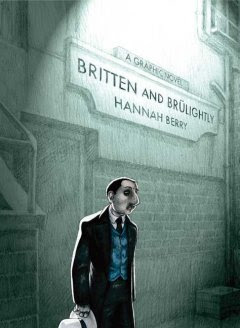
Britten and BrĂ¼lightly

Britten and BrĂ¼lightly
By Hannah Berry
Edition: illustrated
Published by St. Martin's Press, 2009
ISBN 0805089276, 9780805089271
112 pages

A new graphic novel.

A Shared Aesthetic

A Shared Aesthetic: Artists of Long Island's North Fork. (2008). Fleming, Geoffrey K.; Evans, Sara & Amei Wallach
NY: Hudson Hills Press LLC.
ISBN 155595300X, 9781555953003
250 pages

On New Book cart.

Monday, April 20, 2009

Pieces of April

Cute, funny, nice film.


April Burns, the eldest daughter in a highly dysfunctional family, lives in a small tenement apartment on the Lower East Side of Manhattan with her boyfriend Bobby. Although estranged from her family, she opts to invite them for Thanksgiving dinner, probably the last for her mother Joy, who has breast cancer. The film focuses on three journeys: the family's arduous trek from suburbia to New York City, one punctuated by stops for Krispy Kreme doughnuts, bagels, Joy's frequent need for a restroom or a joint to ease her pain, a burial service for an animal they hit, and various arguments and recriminations; Bobby's efforts to find a suit so he can make a good impression on his girlfriend's relatives; and April's preparations for the meal, a near disaster when she discovers her oven is broken. With the help of various neighbors, she manages to assemble dinner, while learning to appreciate the importance of family and making some new friends in the process.

Some of the neighbors in the tenement building are memorable: the Chinese family that ultimately comes to April's rescue; Eugene and Evette, a black couple whose children will be visiting later in the day, and who help April get started cooking her turkey, as well as understand that convenient food is no substitute for good food.

Smokin' Aces

Nothing but profanity and unlimited gun play. A piece of crap.

Saturday, April 18, 2009

Books on Language

April 17, 2009, 6:55 P.M. ET
Books on Language
by MICHAEL QUINION

1. The Stories of English 427 C [420s in Dewey are English & Old English; 427 is for variations]
By David Crystal
Overlook, 2004


This richly textured, nontechnical account of the evolution of English is fascinating because it interweaves multiple narratives. In parallel with the standard language, David Crystal discusses varieties usually considered nonstandard -- dialect, slang and the speech of ethnic minorities -- which previously hadn't received the same level of attention. Traditionalist speakers and grammarians deplore such varieties as inferior or corrupt, but they are increasingly becoming accepted as legitimate, not least because only one in three speakers of English now has it as a mother tongue. With a cornucopia of examples that range from "The Canterbury Tales" to "The Lord of the Rings," and from the correspondence of medieval kings to Internet chatroom gossip, Crystal's exposition is a delight.


2. Language in Danger 417.7 D [410s are Linguistics; 417 is Dialectology & historical linguistics]
By Andrew Dalby
Columbia University, 2003
Languages not only change, they also die: World-wide, a language vanishes on average every two weeks. Andrew Dalby argues that each disappearance diminishes us, because a language encapsulates local knowledge and ways of looking at the human condition that die with the last speaker. Stronger languages squeeze out others: An early example is the language extinction that occurred around the Mediterranean in classical times, through the rise of Latin. Closer to our own time, minority languages -- Irish, Welsh, Native American and Australian tongues -- were banned in school to force minority groups to speak the language of the majority. The mood is now swinging toward encouraging minority languages, and some of those in danger may be saved. Dalby's engrossing account documents endangered languages throughout the world.


3. The Thurber Carnival 817 T [810s are American Literature; 817 is Satire & humor]
By James Thurber
Harper, 1945
James Thurber's antic attitude to language was a revelation when, at age 12, I bought this compilation of essays and stories in a British paperback edition. I first understood that grammar could actually be interesting when I read "Here Lies Miss Groby," his recollection of an English-composition teacher who drilled into her charges that metonymy means "Container for the Thing Contained," as in the phrase "Friends, Romans, countrymen, lend me your ears" -- "ears" is not meant literally; their hearing is. Young Thurber lies awake at night wondering about a wife threatening to hit her husband with the milk -- would "milk" be a case of Thing Contained for the Container? Thurber's whimsical drawings are a joy -- one has a puzzled man sitting on a motionless sled, holding his dog on a leash, as a passing skater, apparently steeped in Swinburne's poetry, shouting: "I said the hounds of spring are on winter's traces, but let it pass, let it pass!" I am glad to have encountered Thurber's storytelling skills and his humor so early in life.


4. Words and Rules 400 P [400s are Language]
By Steven Pinker
Basic Books, 1999

When Americans prefer "snuck" and "dove" to the British "sneaked" and "dived," they're pointing up one of the curiosities of English: the battle between regular and irregular verbs. These two American usages are especially odd because they're 19th-century revivals, reversing what grammarians often assert is an unstoppable historical trend toward regularization. The battle of the verbs can be especially vexing for children, who are avid for rules when they learn a language -- rules that lead to errors such as "breaked" and "holded." Steven Pinker's research confirms that we actually use two tools for making words: rules and memory. Regular verbs pop into mind almost automatically; irregular ones take longer to process because they must be retrieved from memory. Pinker's "Words and Rules" is erudite, readable and funny, leading the reader through a great range of topics, one of which is the cause of the gradual transformation of language over time.

5. The Moon Is a Harsh Mistress SF Heinlein
By Robert Heinlein
Putnam, 1966
Science fiction has invented much vocabulary -- "robot," "force field" and "spacesuit," for instance -- that has since reached the mainstream. And linguistic change itself has been a significant sub-theme in many science-fiction works, partly because it contributes to the sense of otherness that is key to the suspension of disbelief, partly because it is a useful indicator of social and cultural distinctness. Anthony Burgess's anglicized Russian slang in "A Clockwork Orange" and George Orwell's Newspeak in "Nineteen Eighty-Four" are two famous examples. Another memorable example is Robert Heinlein's "The Moon Is a Harsh Mistress." With a sentient computer as a main character, the story is set in a lunar penal colony in 2075, where the inhabitants speak in an English dialect influenced by Russian and Chinese: not yet a pidgin, certainly not yet a creole, but a form of speech indicative of the changes that happen when disparate language communities are forced to communicate.

Mr. Quinion's most recent book, "Gallimaufry: A Hodgepodge of Our Vanishing Vocabulary" (Oxford), has just been published in paperback.

The Curse of Promise Unfulfilled

Isaac Rosenfeld: The highs not so high, the lows not so low


In "Enemies Of Promise," the British literary critic Cyril Connolly famously tried to account for his failure to live up to his own expectations of literary greatness and those of others. It was a merciless self-portrait, but it was meant to describe more than a single author's plight: There is a special precinct of literature reserved for those who never became the major writers that everyone expected them to be.

Enemies Of Promise - 820.9 C

Isaac Rosenfeld (1918-56) is surely one of this number. His 1946 novel, "Passage From Home," earned him accolades from the New York intellectuals, a crowd not given to accolades. It was written when Rosenfeld was 28, and it seemed to mark the coming-of-age of a writer who would sweep all before him. Certainly, at that moment, Rosenfeld had outstripped his friend Saul Bellow, whose "Dangling Man" seemed partly caught in the constricting embrace of its European models.
But Mr. Zipperstein's account suggests, perhaps unintentionally, that the real story of Isaac Rosenfeld is less a matter of extremes: Yes, he was gifted, but he was never destined for greatness -- nor did he entirely fail. The highs were lower, and the lows higher, than the myth would have it. As for the highs, Mr. Zipperstein notes that the critic Irving Howe faulted (not unfairly) "Passage From Home" for relying, weakly, more on rumination than on description. As for the lows, the Rosenfeld reviews and stories routinely collected under the rubric of a sorry falling-off from early promise are in fact "a marvel of output," as Mark Schechner has written. A 20th-century Jewish Hazlitt, Rosenfeld turned every subject to his own purpose, so that the judgments in nearly every review became an implicit manifesto, pointing to what writing should be. He was often more acute than the professional critics who would later lament his "failure."

Why not unfairly, rather than, simply, fairly?

Mr. Zipperstein does a splendid job of sifting through the details of Rosenfeld's life, reminding us of his importance and acquainting us with his work. He does not, thank goodness, impose his reading of Rosenfeld's place in literary history too insistently, perhaps recognizing that, in a first full biography, the life must take precedence over the work. What he offers instead is the kind of attention for which Rosenfeld should not have had to wait, after his death, half again as long as he lived.

One-Vehicle Presidential Motorcade

"Harry Truman's Excellent Adventure"
By Matthew Algeo
Chicago Review Press, 262 pages, $24.95

973.918 A

When Harry and Bess Truman took their vacation, they were part of a growing American pastime: the automobile vacation. Postwar prosperity, brand-new highways and an itch to see the country made road travel popular with the middle class. In the golden age of the American family vacation, Detroit's Big Three auto makers manufactured family-friendly cars that were both roomy and affordable. The price of gas was 27 cents per gallon, and uniformed attendants filled up the tank and cleaned the windshield. Motels -- where you could pull right up to the door of your room -- were a new phenomenon.

27 cents? A gallon of regular gas went for 29.9 cents in 1970, 1971.

In keeping with one of the book's conceits, Mr. Algeo makes a pilgrimage to the Grand Ballroom of Philadelphia's Bellevue-Stratford Hotel, where Truman spoke. "I was standing in the very spot where Harry had stood exactly fifty-five years earlier, front and center in his white dinner jacket, under the blazing klieg lights, measuring an imaginary fish, and giving Ike hell." Through such vignettes Mr. Algeo takes us back to a time, despite Cold War anxieties, "of unbridled optimism," then brings us forward to our supposedly more cynical age.

Truman was criticizing Eisenhower for the latter's proposal to cut defense spending. A rich irony.


Harry Truman drinks a Coke at a service station in Frederick, Md.

The author retraced the Trumans' trip in stages from fall 2006 to summer 2008, hunting down the service stations where the couple bought gasoline, the diners where they ate a square meal and the hotels where they stayed the night. He even tracked down eyewitnesses who remembered the Trumans passing through, including one man who had saved the Coke bottle that Truman drained at a Gulf gas station in Maryland. The station owner asked the former president to take his mechanic to task for being a Republican, Mr. Algeo reports, but Truman replied that it was "too hot to give anybody hell." We even see the former president polishing off the soda in one of the many charming snapshots of the traveling Trumans that Mr. Algeo unearthed.

Former President Harry Truman unloads his car's trunk at a motel in Decatur, Ill., on June 19, 1953.


The small-town America that Truman visited -- where he seems to have been enthusiastically greeted by folks eager to thank him for his service -- is of course much changed when Mr. Algeo arrives, following in the president's footsteps. Those same towns are now generally in a decline that began a few years after Truman passed through, when President Eisenhower signed the Federal-Aid Highway Act of 1956 and created the interstate highway system that sent travelers whizzing past towns where once they might have stopped for gas or a meal or an overnight stay. As Mr. Algeo reports, the Parkview Motel in Decatur, Ill., where the Trumans stayed in 1953, is now owned by the Illinois Department of Corrections, home to prisoners finishing out the last year of a sentence.


Harry Truman speaking in Philadelphia

Friday, April 17, 2009

The Lookout

After seeing Definitely, Maybe, I looked for films that the actors were in, and found this film with Isla Fisher. Didn't work. I'd give it a 5.

An admired high school hockey player with a bright future, drives in the night with his girl friend and two other friends with his headlights off with devastating results. The former athlete is left with a brain injury that prevents him from remembering many things for extended periods of time. To compensate, he keeps notes in a small notebook to aid him in remembering what he is to do. He also lives with a blind friend who aids him. He is unable to have meaningful job and he goes to work as a night cleaning man in a bank. He comes under the scrutiny of a gang planning to rob the bank. The leader befriends him and gets him involved with a young woman who further reels him in. Confused, but wanting to escape his current existence, he initially goes along with the scheme. When he realizes he is being used, he attempts to stop the robbery, which of course immediately goes awry.

That's the summary in Alisweb. An interesting idea, but quite a violent film that runs mostly on empty. Acting is good, especially the lead, Joseph Gordon-Levitt; even Matthew Goode, who plays the chief bad guy, acts well. Isla Fisher is wasted as a damsel who is used to reel in the bait with her body. The film simply relies on the premise of the accident and its effects, and, ultimately, on violence. Maybe a 5.

And Jeff Daniels again gets stuck with bad hair (though not as bad as when he played Col. Joshua Lawrence Chamberlain in Gettysburg.