Tuesday, March 17, 2009

Texas, Brooklyn, China

Saw three films this past weekend:

The trip to Bountiful (1985)
Script by Horton Foote (who passed away 5 March). Good acting, but not a terribly enjoyable film. One interesting piece of trivia" the actor who played Ludie Watts was John Heard, who played the shithead executive Paul in the movie Big (1988).


Everyday People (2004)

A big old Jewish restaurant is closing down, being sold to a developer who will build a high rise in the neighborhood that is beginning to be 'gentrified'. The movie traces a number of characters over the course of one day. Deftly acted, it engages the viewer. Very enjoyable.


Please vote for me (2007) - Michael Simon recommended this film to me. Three third graders run for Class Monitor. The politics of the 8-year-olds is startlingly bitter and highly competitive. Just how involved parents are is interesting: they even go to the school. Seeing how the Chinese live is interesting: the kids nap and eat in school, are greeted by parents when their school day is over, and go home to do a lot of work.

The movie was not that good as entertainment, but informative.

Friday, March 13, 2009

The woman behind the New Deal

Downey, Kirstin. (2009). The woman behind the New Deal : the life of Frances Perkins, FDR's Secretary of Labor and his moral conscience. New York: Nan A. Talese

Other than the name, I knew nothing about Frances Perkins. Now I know a great deal. She became interested in social work very early in her life, worked with Hull House in Chicago (with Jane Addams), and wound up in New York. The day of the Triangle Shirtwaist factory fire she was in a friend's house on Washington Square North, and ran to the location of the fire (on Washington Square East -- I actually took an NYU course in a building in that same location).

FP met FDR early on in New York government. She knew Robert Moses before he worked in State government. She knew Al Smith. When FDR won the Presidency, he appointed her Labor Secretary, the first woman to ever serve in the Cabinet. She accomplished a great deal, indeed.

The book contends that Social Security, Unemployment insurance and others New Deal programs were her ideas that FDR adopted. I have never read about that before. The book also contends that when FDR told Cabinet member of the Pearl Harbor attack, FP suspected that he had known about it, for he did not show the same surprise and shock that other Cabinet members showed.

Revealing, sympathetic, the book does a good job of uncovering a forgotten figure who played an important role in 20th century America. Indeed, the world: she was instrumental in saving LIO people from Europe, and got Churchill and FDR to support it after the War.

In her personal life, FP was quite unlucky. Both her husband and her daughter were bipolar, in an age when there were no medicines to effectively deal with the illness. She did make friends, close personal friends with several women. Mary Harriman Rumsey, older sister of Averell, in particular, was very close friends with FP. They shared a house for some time.

Yet about halfway through, the book gets sloppy in its assertions. I'd like to see more documentation on some of the declarations made.

And then there is the Venona Project.

"The Americans and British long had been skeptical about Soviet intentions. As a result, between 1942 and 1945, the United States and Great Britain engaged in the Venona Project, intercepting encrypted cables between Russian intelligence agencies and Soviet spies based in America. They began successfully decrypting these messages in 1946. National security officials kept the information secret, but released some facts through the FBI, and through that agency to Truman.The deciphered messages exposed several hundred Americans, including some government officials, as communist spies."

Connections

In reading the review written by William Anthony Hay of 1848, by Mike Rapport (post below this one), I came across the name of Metternich. I know the name, but little about the person. Thus, I googled the name; the first link was Wikipedia. In the article's bibliography I found the entry: Zamoyski, A. (2007). Rites of Peace: The fall of Napoleon & the Congress of Vienna. New York: HarperCollins Publishers. HWPL owns it.

A Year of Living Dangerously

1848
By Mike Rapport
(Basic Books, 461 pages, $29.95)


Reviewed by William Anthony Hay

Dramatic changes over the early 19th century and the long shadow of the French Revolution set the context for 1848.

Tuesday, March 10, 2009

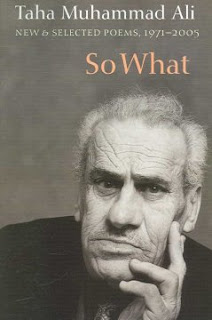
So what

A book on the New Book cart caught my attention.

My Happiness Bears No Relation to Happiness : A Poet's Life in the Palestinian Century. (2009). Hoffman, Adina. New Haven: Yale Univ Press.


I looked him up on the OPAC, and found a book of his poetry. I'll look at it.

So what : new & selected poems (with a story), 1971-2005. (2006). ‘Al¯i, T¯ah¯a Muhammad. Port Townsend: Copper Canyon Press.

Ottobib's entry: Muhammad, T., Cole, P., & Hijazi, Y. (2006). So What: New & Selected Poems (with a Story) 1971-2005. Port Townsend: Copper Canyon Press.

Two Crooks for the Road


Go Down Together 364.1552 G
By Jeff Guinn
(Simon & Schuster, 466 pages, $27)


Among couples known almost universally by their first names, few have captured the imagination like Bonnie and Clyde, the young lovers from Texas who escaped the poverty of West Dallas in the 1930s and went on a meteoric crime spree on America's back roads.

Unfortunately, most of the newspaper stories that breathlessly fueled the couple's legend contained so much embellishment that even Bonnie Parker herself felt the need to set the record straight. While the duo was releasing a police chief that she and Clyde had taken hostage, the lawman asked Bonnie if there was a message she wanted to send to the press. "Tell them I don't smoke cigars," she said.

All well and good, but get this one: If anything, Bonnie and Clyde owed their popularity to timing. In 1933, amid the countless foreclosures, forced evictions and failed financial institutions of the Depression, the public had soured on bankers and law-enforcement officials. For the average person, "Clyde and Bonnie's criminal acts offered a vicarious sense of revenge," Mr. Guinn writes. "Somebody was sticking it to the rich and powerful."

Emphasis added.

Monday, March 9, 2009

China -- Description and travel.

Lost on planet China : the strange and true story of one man's attempt to understand the world's most mystifying nation, or how he became comfortable eating live squid (2008).
Troost, J. Maarten.
New York : Broadway Books.

Friend, Soulmate and Sister

The Ballad of Dorothy Wordsworth
By Frances Wilson
(Farrar, Straus and Giroux, 316 pages, $30)

Her subtle sense of nature's effects made its way into William's poetry.

Ms. Wilson's previous two biographical studies have unusual, even exotic, slants: The first, "Literary Seductions," focuses on literary couples who find themselves possessed by text and sex, including the erotic memoirists Anaïs Nin and Henry Miller; the second takes up the case of Harriette Wilson, the Regency courtesan who published her tell-all memoirs serially, blackmailing her clients into paying her to stop. (The Duke of Wellington was unfazed: "publish and be damned.") Racy stuff! So what in the world does Ms. Wilson see in Dorothy Wordsworth?

It is true that Dorothy occupies a permanent place in literary history, but that place is often marginal, even literally so. Through much of William's discursive meditation "Tintern Abbey," we think that William is soliloquizing in high-poet fashion but then read, at about line 120: "May I behold in thee what I was once, / My dear, dear Sister." For all that time, as editors tell us in their footnotes, William's sister has been standing there. It is Dorothy, the poet claims, who reflects a picture of his true self: "Nature never did betray / The heart that loved her."

Her sensitive awareness to subtle natural effects were such that Samuel Taylor Coleridge, William's friend and fellow poet, considered her to be the equivalent of a perfect "electrometer" – a "fragile piece of gold" able to measure tiny changes in electrical pulses. Both poets relied on Dorothy's observations of the natural world – Coleridge in "Christabel " and William in "I Wander'd Lonely as a Cloud ," with its dancing golden daffodils.

Saturday, March 7, 2009

2 biographies

The fly swatter: how my grandfather made his way in the world. (2002). Nicholas Dawidoff.
New York: Pantheon Books.


Also his:

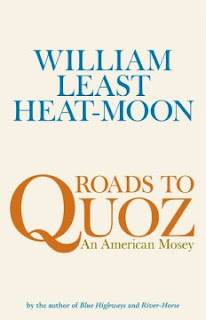
Least-Heat Moon

Roads to Quoz: an American mosey.(2008). William Least Heat-Moon. New York: Little, Brown and Co.

On Lincoln

Lincoln on race & slavery. (2009). edited and introduced by Henry Louis Gates, Jr. Princeton : Princeton University Press.

Books on the Brilliantly Disturbed

1. A Beautiful Mind

By Sylvia Nasar
Simon & Schuster, 1998

To paraphrase F. Scott Fitzgerald, there are no second acts in the lives of schizophrenics. Once entrenched, paranoia rarely lifts. Thus the resurrection of mathematician and economist John Nash is a tale for the ages. While Nash's conversation as a young man had "always mixed mathematics and myth," by the late 1950s the MIT professor was going far beyond eccentricity. He talked of becoming the emperor of Antarctica; he also insisted that aliens were communicating to him through the New York Times. Nash spent the next three and a half decades as a revolving-door psychiatric in-patient and aimless wanderer. But after receiving the 1994 Nobel Prize for his long-ago dissertation on game theory, the former boy wonder miraculously regained his appetite for scientific study. Sylvia Nasar's "A Beautiful Mind" is less schmaltzy and tidy than the Oscar-winning movie based on it. The Hollywood version suggests that Nash benefited from new medications, but as Nasar reports, Nash actually stopped taking antipsychotics in 1970 and relied solely on his potent mind. "Gradually," Nash recalled, "I began to reject some of the delusionally influenced lines of thinking."

2. The Man Who Loved China
By Simon Winchester
Harper, 2008

Best known for his gripping narrative about the odd couple behind the Oxford English Dictionary ("The Professor and the Madman"), Simon Winchester here portrays the hypomanic, chain-smoking Brit who produced an immense encyclopedic work all by his lonesome. In 1936, Joseph Needham, a noted biochemist and ladies man, fell in love with a young scholar from Nanjing who taught him classical Chinese. "Almost delirious with happiness" from creating his own personal English-Chinese dictionary, this "20th century Erasmus" then sought to rescue China from its lowly status as "the booby nation." Needham's magnum opus -- he produced 17 volumes before his death in 1994 -- was called "Science and Civilisation in China," and it argued that the Middle Kingdom was once way ahead of the West. Printing, for example, came six centuries before Gutenberg. Winchester spotlights Needham's perilous research trips, which brought him into contact with Chairman Mao and Zhou Enlai, as well as his colorful non-academic obsessions, including gymnosophy (i.e., nudism), Morris dancing and burnt toast.

3. Empire
By Donald Bartlett and James Steele
Norton, 1979

Nearly a full generation before Leonardo DiCaprio did his star turn in "The Aviator," Donald Bartlett and James Steele punctured the myth that once was Howard Hughes. Today it's easy to forget that Hughes's name was, for a long time, synonymous solely with gargantuan achievement. "Nobody can outdo me," the 25-year-old movie producer proclaimed shortly after taking Hollywood by storm with "Hell's Angels" (1930), an early talkie, which he also directed. Eight years later, the dashing mogul became a national hero when he shattered the record for flying around the world by a full three days. Bartlett and Steele, having sifted through 250,000 pages of documents, detail every chilling twist and turn of Hughes's descent into emotional paralysis. By the late 1960s, just about all the lonely billionaire ("Don't dare call me millionaire!") looked forward to was sitting naked in the middle of hotel rooms -- "the germ-free zone."

4. The Difference Engine
By Doron Swade
Viking, 2001

In 1822, disgusted by human error, the 30-year-old Cambridge-educated mathematician Charles Babbage dreamed up a cure: a calculating machine. After his annus horribilis of 1827, in which he lost a son as well as his wife and father, Babbage was inconsolable. To avoid a complete breakdown, he threw himself into working on a mechanical computer that he called the "difference engine." A few years later, he completed a part of Difference Engine No. 1, a 15-ton contraption that he used as a demonstration piece. Unfortunately, Babbage's obsession produced mountains of elaborate drawings for uncompleted machines but little else except bitterness. According to one of his few friends, the aging loner "spoke as if he hated mankind in general, Englishmen in particular and the English government most of all." Though as Doron Swade, a curator at the Science Museum in London, memorably shows in "The Difference Engine," this indefatigable misanthrope was the grandfather of the computer age.

5. Wizard
By Marc Seifer
Birch Lane, 1996

A century before cellphones and the Internet, another "wireless revolution" turned America upside-down. Its chief theoretician was Nikola Tesla, a Serb from Croatia, who secured the first patent for a means to produce high-frequency radio waves. Tesla was considered, along with Thomas Edison, one of the "twin wizards of electricity," Marc Seifer writes in this absorbing biography. Right after arriving in Manhattan in 1884, Tesla began working 20-hour days at Edison's lab; when his boss nixed his alternating-current induction motor, Tesla set out on his own. Seifer's meticulously researched account, some 20 years in the making, features riveting anecdotes of this man about town who hobnobbed with both Mark Twain and Stanford White. Like Howard Hughes, Tesla was a germo-phobe who called the hotel room home. But the room number had to be divisible by three, and he required assurances that no hotel employee would get within three feet of him. Sworn to celibacy, the anorexic Tesla saved up his passion for pigeons: "To care for those . . . birds . . . is the delight of my life. It is my only means of playing."

Mr. (Joshua) Kendall's biography of Peter Roget, "The Man Who Made Lists," has just been released in paperback.


Thursday, March 5, 2009

For the relief of unbearable urges

A patron asked for For the relief of unbearable urges by Nathan Englander. I'll have to take a look.

The Guernsey Literary and Potato Peel Pie Society

Patrons have asked for this book a number of times. Today a patron asked for reviews of the book; Edna Ritzenberg, a local of South African extraction (who leads book discussions here at HWPL and at other libraries) is going to lead a discussion of it.

Friday, February 27, 2009

Boats out of watermelon rinds


Turkish film: Karpuz kabugundan gemiler yapmak


Interesting start, slow progress (very s-l-o-w), nice finish. Worthwhile.

The Endless Allure of El Dorado

The Lost City of Z
By David Grann
(Doubleday, 339 pages, $27.50)


Percy Harrison Fawcett, the affection-starved son of an independently wealthy Devon cricketer, joined the British army, got "slightly gassed" during World War I, surveyed Bolivia, went quietly mad, devoted his middle years to searching for the Lost Cities of the Brazilian rainforest and, while doing so in 1925, vanished.

... his fate remains unknown, and his Lost City – of which Arthur Conan Doyle made much, with the Professor Challenger of his novels based largely on Fawcett – remains unfound.

Now in the hands of David Grann, an amusingly self-deprecating Brooklyn nerd on the staff of the New Yorker, it is brought vividly alive once more in "The Lost City of Z." So good is his recounting of the yarn that no less a luminary than Brad Pitt is said to be interested in a film version.

Review by Simon Winchester, the author of "The Map That Changed the World," "Krakatoa" and, most recently, "The Man Who Loved China."

Thursday, February 26, 2009

It Happened Tomorrow

A regular patron told me about this film: It Happened Tomorrow

That Sinking Feeling

The last of the independent fishermen – and their troubles


Down at the Docks
By Rory Nugent
(Pantheon, 290 pages, $24.95)

Saturday, February 21, 2009

Visitor

Another excellent film. This review captures it well.

Written by Jeff Giles

The Visitor (20th Century Fox)- Director: Tom McCarthy
Starring: Richard Jenkins, Haaz Sleiman, Danai Gurira, Hiam Abbass


Movies about lonely, disaffected older men have never exactly been out of vogue in Hollywood, but over the last 15 years or so, they’ve been seemingly more popular than ever – from Paul Newman (1994’s Nobody’s Fool) to Jack Nicholson (2002’s About Schmidt), graying actors have courted critical greatness by starring in dramas with varying degrees of uplift. (Bill Murray is the standard-bearer of this subgenre, thanks to his roles in Lost in Translation and Broken Flowers.)

Now, veteran character actor Richard Jenkins – one of those “that guy” actors you’ve seen in everything from The Witches of Eastwick to Step Brothers – has found his own lonely older guy project: The Visitor, a small, graceful drama written and directed by Tom McCarthy (The Station Agent). It won some festival awards and earned a stack of glowing reviews during its original limited run, and now, thanks to a Best Actor nomination for Jenkins in this year’s Academy Awards, it’s enjoying a whole new round of buzz – and so is Jenkins.

The attention is deserved – after a lifetime of supporting roles, Jenkins finally gets his chance to truly shine in The Visitor, and he knocks it out of the park, using all of the film’s 104 minutes to peel away his character’s layers with a quiet performance that’s almost Newmanesque in its finely shaded understatement. Jenkins plays Connecticut college professor Walter Vale, who begins the picture as a bit of a douche – in the opening scenes, he fires his piano teacher and curtly dismisses a student’s pleas for mercy – and such a wet noodle that by the time he’s strong-armed into traveling to New York to present a paper he co-authored in name only, you may be wondering how and why he deserves his own movie.

It’s when he reaches the city, of course, that things start to get interesting. Upon entering his New York apartment – which he’s had for 25 years, but rarely visits – Vale is alarmed to discover a woman (Danai Gurira) in his tub and her enraged boyfriend (Haaz Sleiman) thundering down the hallway, demanding to know what he’s doing there. As he quickly discovers, the couple has been subletting his apartment from a person named Ivan, despite the fact that Walter doesn’t know Ivan, and Ivan has no right to make the arrangement. Rather than allow his surprise tenants to wander the streets looking for a new place to live, Walter allows them to stay – a decision that, if you know your movies, you will not be surprised to discover has life-altering effects.

At first, Walter’s decision to share his apartment seems like one of those nutty, spur-of-the-moment plot twists that screenwriters live and die by, but that’s just McCarthy being cagey; as the viewer slowly discovers, Walter had a different kind of life before the movie started, and he has reasons for doing this that he doesn’t fully understand until later in the film. He’s most immediately won over by Tarek, the djembe-playing boyfriend – and thanks to Sleiman’s wonderfully charming performance, it’s easy for the audience to understand why. Walter is fascinated by Tarek’s drumming, and they bond over lessons; with each strike of the djembe, Walter thaws, until, in a wonderful sequence, he finds himself joining a drum circle in the park. It’s a scene that works on several levels, whether you choose to interpret it as a metaphor for the community-building power of music or simply a turning point for the movie.

Of course, chance encounters can be good or bad – something McCarthy reminds us in The Visitor’s second act, when Walter is called upon to help Tarek out of a sudden, terrible predicament. The ways he answers this call, and the completion of his transformation from closed circuit to human conduit, are best left out of this review; suffice it to say The Visitor is a beautifully tender drama built out of small, warm moments, with some profound things to say about the possibilities buried in every stranger you pass on the street. It’s sort of the anti-Death Wish, offering a glimpse of city life that’s rife with hope and brotherhood. Jenkins has said he’s waited his entire professional career to be a part of something like The Visitor, and after watching the film, you’ll be as glad as he is that the opportunity presented itself.

The DVD comes with a small assortment of bonus features, including an “inside look” (4:35) that offers a surface glimpse of the film that’ll probably be most useful for someone who hasn’t seen the movie. More enjoyable is “Playing the Djembe,” a look at the instrument’s profound importance in the film – starting with McCarthy’s lessons, and continuing through Sleiman’s experiences playing with a New York jazz combo during scenes for the film. There’s also an entertaining commentary track from McCarthy and Jenkins, and a few deleted scenes that don’t add much to the film. Not a ton of extra content, but the studio had to leave something for the inevitable double-disc special edition, right?

Tarek is arrested by undercover police for allegedly jumping the turnstile, except that his drum got stuck as he was negotiating the turnstile after having swiped his Metrocard first for Walter, then for himself. He pleads his case, but the cops aren't interested. Walter pleads, too, asserting that it must be some kind of mistake, but is told to back away. Tarek is taken to a building that looks more an industrial plant than a jail (later, Walter asserts, "maybe that's the point."). Walter hires a lawyers, trudges out to Queens daily, and deepens his relationship with Tarek.

Extending his character's persona, Jenkins holds a letter that Tarek's girlfriend Zainab has written him against the glass separating them, and looks away, as if assuring Tarek that he is not reading the letter, and, indeed, adding a dose of privacy. Slowly, Walter is shown to be emerging from his protective cocoon: he cares for Tarek, and wishes he could end this nightmare. But he can not, and the lawyer he has hired can not, either.

Tarek's mother (Mouna, played with understated sadness by Hiam Abbass, an Israeli Arab actress). shows up unannounced at Walter's apartment, looking for her son (who had told Walter he did not want her to know about his arrest). Walter invites her in, and tells her of Tarek's arrest. He offers her Tarek's room as a place to stay, and she diffidently accepts. Walter takes Mouna to meet Zainab at the street market where Zainab sells her crafts and jewelry. "She's very black," Mouna remarks. The race differences (Tarek is Syrian, Zainab Senegalese, Walter Caucasian) are touched on, allowed to be seen, a courageous and correct act; race is not often exposed to sunlight.

The lawyer Walter hired tells him and Mouna that before 9/11 such a case as Tarek's would've been cut and dry, disposed of easily; but that after 9/11 such cases had become very difficult. He asks Mouna about documents the government would have sent, and she denies having received them. As it turns out, she had received them, ignored them, then forgotten about them, a critical mistake that helps contribute to Tarek being deported.

Having found out about Tarek's fate, Walter and Mouna head back to the apartment. A night or two before Walter had taken Mouna to a Broadway show ("Phantom of the Opera") and out to dinner, where she ordered a glass of wine (the first one she's had; Walter had offered her wine before, and she had never joined him). That night Mouna tells Walter she is heading back to Syria, to be there when Tarek arrives. The romance that has been developing under the surface runs into a brick wall of sad reality. They say good night, and head off to separate rooms, and separate beds. Some time later Mouna knocks on Walter's bedroom door, enters, and slides into his bed, back first, emphasizing her reluctance even then to do so. They talk, and she confesses about the document.

Next morning they go to the airport, hug goodbye, and as they are parting Walter says he does not want her to leave. Out of family loyalty, he does go. In a cutaway, we see Walter carrying a djembe on his shoulder; he enters a subway station (a Broadway Lafayette sign is seen in the background), sits, and begins to drum.

Excellent film. Really good acting.

Autobiographies by Actresses

1. Scarlett O'Hara's Younger Sister
By Evelyn Keyes
Stuart, 1977
As the title of Evelyn Keyes's exuberantly clear-eyed autobiography makes clear, the woman who played Suellen in "Gone With the Wind" was more often bridesmaid than star. But what she was denied on the screen she made up for on the page in one of the juiciest and most shrewdly observed books ever to come out of Hollywood. The actress who grew up poor and provincial in Atlanta went knocking on studio doors with nothing more than a vague dream of stardom and a naïveté so thick it was almost a protective armor. She needed every bit of that, and her extraordinary humor, to survive the Daddy figures who served as mentors and something more: Cecil B. DeMille, Harry Cohn, Charles Vidor and John Huston, her third and most flamboyant husband. He takes her out deer hunting in Idaho and fishing with Hemingway in Key West (where the writer's wife, Maria, "cleaned her toenails with a long knife and cut the bread with it afterward"). On the Idaho trip, under Huston's tutelage, Keyes successfully kills a buck -- an experience that her husband later describes as "the best part of our life together." In "Scarlett O'Hara's Younger Sister," Keyes, who died last summer, raises unflappability to a fine art. Don't be fooled by the throwaway style: The timing is too good, the mots too justes.
2. The Lonely Life
By Bette Davis
Putnam, 1962
Any actress who can expose herself to the flesh-peddling standards of Hollywood -- surviving such confidence-shattering epithets as "little brown wren" and "as sexy as Slim Summerville" -- and still insist on a high-toned career while staring down studio bosses has chutzpah to burn. And Bette Davis, a stalwart New Englander who made three movies a year while using her excess energy to fight with Warner Bros., had it in spades. Even more important than sheer ambition, or perhaps it is one of ambition's hallmarks, was Davis's ability to put aside her East Coast theatrical snobbery and see movies as a different medium and moviemaking as a craft with different technical demands that she was determined to learn. As suggested by the title of her memoir, "The Lonely Life," Davis had little interest in false pride; she describes the highs and lows of her career and marriages, coming to the realization that you can't "have it all." Her attempts to be a "real" wife were doomed to failure, she confesses. The role of the "little woman" was perhaps the only one totally beyond her.
3. My Story
By Mary Astor
Doubleday, 1959
Though she made more than a hundred films, most of them silents, the dark-eyed beauty Mary Astor was never a mega-star, but she was more interesting than many who were. Astor was the daughter of an educated, schoolteacher mother and an ambitious German immigrant father so grasping and domineering that studio executives refused to negotiate with him. Sheltered and exploited her entire life, she hadn't had a chance to develop a moral compass or a sense of self before falling under the spell of mentor-lovers both kind (Jack Barrymore) and ambivalent (the rest), and of husbands (four in all) with a lower libido than hers. An increasingly disabling alcoholism led her first to the Catholic Church and then (with the encouragement of a priest-psychotherapist) to the writing of this remarkable book, in which she comes to terms with the rushed-into marriages, the drinking and above all the furor in the 1930s over a diary -- which surfaced during a child-custody battle with one of her ex-husbands -- in which she recorded her affair with writer George S. Kaufman. In "My Story," Astor displays those unusual and very grown-up qualities -- refined but sensual, stand-offish but come-hither -- that sometimes were a liability in Hollywood casting but make for a complex and riveting memoir.
4. Lulu in Hollywood
By Louise Brooks
Knopf, 1982
After laboring for much of the 1920s in Hollywood, the black-helmeted Kansas-born free spirit Louise Brooks had to go to Europe to become a star. She was a revelation in two mesmerizing German silent films directed by G.W. Pabst, "Pandora's Box" (1928) and "Diary of a Lost Girl" (1929) -- but then Brooks, independent-minded to a fault, refused to compromise once Hollywood came calling, and she basically threw her career away. By the late 1940s, she was working as a saleslady at Saks Fifth Avenue in New York. She was rescued by admirers, chief among them James Card, curator of the George Eastman House film archive in Rochester, N.Y. He persuaded Brooks to move to Rochester, where she lived in the 1950s as a recluse, watched films, her own and others, and was reborn as a writer. (She was also rediscovered as an actress by Kenneth Tynan, who championed her work in an influential piece for The New Yorker.) "Lulu in Hollywood" -- Lulu was the ill-fated innocent who drove men to distraction in "Pandora's Box" -- is a collection of Brooks's often brilliant essays. Some of the pieces recount her own joyous romp through the 1920s as a Ziegfeld showgirl (a job she enjoyed more than making movies) and party-girl courtesan. Other essays shimmer with insight as she discusses the work of Humphrey Bogart, W.C. Fields, Greta Garbo, Lillian Gish and others. She paints a vivid picture of Bogie, for instance, still showing vestiges of the stiff stage actor in "The Roaring Twenties" in 1939, when he appears helpless opposite James Cagney, whose "swift dialogue" and "swift movements . . . had the glitter and precision of a meat slicer . . . impossible to anticipate or counterattack."
5. Me
By Katharine Hepburn
Random House, 1991
Katharine Hepburn, equal to Bette Davis in ambition, seems in this memoir also to share her sense of solitary pursuit: "People who want to be famous are really loners. Or they should be." Like Davis, Hepburn put career first; unlike Davis, she never really fantasized the perfect marriage and the little white house. Until she fell for Spencer Tracy, she kept her lovers -- Howard Hughes, Leland Hayward -- at arm's length and was a shrewd businesswoman from the start. Her writing style consists of a slapdash series of jottings to self and fans, as if she were dictating while striding over a golf course. Yet "Me" captures beautifully that signal Hepburn combination of presumption and insecurity, self-love and abject humility. Should I have done this, done that? Wasn't I a bitch! And, yes, she was, often, but also an enchantress, and she is unstinting in showing us both. A superhuman resiliency allows her (like Davis) to suffer the most humiliating setbacks -- she was once famously declared "box-office poison" -- and continue going forward. Her flinty New England upbringing was both inspiration and protection: At her parents' urging, she was diving off cliffs, wrestling and competing from an early age, turning fear into something she feared so much that it made her fearless.

Ms. Haskell's "Frankly My Dear: Gone With the Wind Revisited" will be published next week by Yale University Press.
* FIVE BEST
* FEBRUARY 21, 2009
Printed in The Wall Street Journal, page W8

Autobiographies by Actresses

In today's Wall Street Journal, Molly Haskel writes about five books:

Scarlett O'Hara's Younger Sister. (1977).
Evelyn Keyes. Secaucus: L. Stuart.

The Lonely Life. (1962).
Bette Davis. New York: Berkley.

My Story (1959).
Mary Astor. New York: Doubleday.

Lulu in Hollywood (1982).
Louise Brooks. New York: Knopf.

Me. (1991)
Katharine Hepburn. New York: Random House.

Arranged

Really just a wonderful film. A review on IMDb.com puts it this way: centers on the friendship between an Orthodox Jewish woman and a Muslim woman who meet as first-year teachers at a public school in Brooklyn. Over the course of the year they learn they share much in common - not least of which is that they are both going through the process of arranged marriages.

The acting is really good, feeling genuine. The film is less than perfectly polished, as, indeed, is everything about the film, which makes for a grand film. It has something of real-life feel to it, not so much a polished look and feel as a feel of realism. A powerful message of tolerance, of doubt, of independence, of prejudice, of enlightenment, of tolerance. Magnificent.


Zoe Lister Jones ... Rochel Meshenberg


Francis Benhamou ... Nasira Khaldi

Wednesday, February 18, 2009

Assassination in Algiers: Churchill, Roosevelt, de Gaulle, and the murder of Admiral Darlan. (1990). Anthony Verrier. New York: W.W. Norton.

I read about this book in the Jean Smith biography of FDR.

Alfred A. Knopf Jr., Influential Publisher, Dies at 90

Alfred A. Knopf Jr., who left the noted publishing house run by his parents to become one of the founders of Atheneum Publishers in 1959, died on Saturday. He was 90, the last of the surviving founders, and lived in New York City.

With Simon Michael Bessie and Hiram Haydn, an editor at Bobbs-Merrill, founded Atheneum.

Atheneum got lucky fast. Its first three lists produced three No. 1 best sellers: “The Last of the Just” (1960), a novel about the Holocaust by André Schwarz-Bart; “The Making of the President, 1960” (1961), the first in Theodore H. White’s series on presidential campaigns; and “The Rothschilds: A Family Portrait” (1962) by Frederic Morton.

The violin

The violin

Film Movement, and Cámara Carnal Films, written, produced and directed by Francisco Vargas Quevedo.

Interesting, gritty, shot in black and white. Ultimately satisfying.

Corral Falso, Guerrero, Mexico

Friday, February 13, 2009

That Man


Incomplete at the time of his death in 1954 and only recently discovered, Jackson's elegant memoir of his years with FDR is an invaluable addition to the literature. Jackson, who served as Roosevelt's Attorney General before his appointment to the Supreme Court, was present for everything from discussions of high policy to poker games with the president to screenings of home movies of the Yalta conference. A sound civil libertarian, Jackson often disagreed with FDR's policies, and his portrait, though warm and intimate, is all the more impressive because of this balance of faults and abilities. Jackson's observations of the time and of the many people who interacted with FDR are so deftly drawn that readers share the author's sentiment, upon hearing of the president's death, that "an era has come to an end." The editing by Barrett (law, St. John's Univ.), who fleshed out the unfinished work with documents and other writings by Jackson, is remarkable in its own right; the footnotes themselves constitute a mini-history of the FDR presidency. Summing Up: Essential. All levels and libraries. Copyright 2004 American Library Association.

Intelligent, informed thoughts on FDR’s presidency by a close associate: Solicitor General, Attorney General, and finally Supreme Court Justice Jackson (1892–1954).Written in the early 1950s but only recently discovered by editor Barrett among Jackson’s personal papers, the manuscript considers FDR in separate chapters as a politician, lawyer, commander-in-chief, administrator, economist, leader, and friend. Although the text has a finished quality, it also has the brevity of quick notes jotted down with examples of Roosevelt’s strengths and weaknesses in each department. Jackson promises readers the "testimony of an interested witness" and takes seasoned measure of a man so often "the subject of undiscriminating idolatry or of unreasoning hate." What the author saw was a self-confident gentleman, brimming with intellectual capital, informal but dignified, capable of being mercurial and of trespassing on legislative turf, as when he tried to remove policymakers outside executive agencies. Jackson unveils episodes of step-by-step policy formation, as when the administration exchanged destroyers for naval and air stations in the Atlantic, bypassing (with dubious constitutionality) Congressional approval. He also points out, again with examples, Roosevelt's shortcomings: FDR was "impatient of the slow and exacting judicial process"--impatient, indeed, with anything that was slow and exacting--and Jackson remarks that, for someone who effected radical changes on the economic landscape, his friend’s vision "did not impress me as being grounded in economic theory or practice." Rather, FDR made his decisions based on political judgment and social philosophy, which he was able to communicate to the man on the street. Jackson writes smoothly and manages to compress many angles of complex material into a brief text.Not profoundly revelatory, but the intimate look into the way decisions were made brings Roosevelt very much into human focus. (24 halftones, not seen)Book-of-the-Month Club/History Book Club main selection Copyright Kirkus 2003 Kirkus/BPI Communications.All rights reserved.

Thursday, February 12, 2009

Photographed by Bachrach

Rick Fox showed me this book. David Bacharach Jr., German born, a photographer's assistant, was sent to Gettysburg to photograph the dedication of the cemetery (to which President Abraham Lincoln had been invited).

Collins, D. (1992). Photographed by Bachrach. New York: Rizzoli


Lincoln is supposed to be in this photograph. Bacharach had gotten to Gettysburg on a "bulky, horse-drawn portable darkroom necessary for the production of wet-collodion negatives then used by most phtotographers." p.16

"Wet-collodion negatives were ...heavy, breakable glass plates that were made camera-ready by flowing a sticky, photochemically sensitive liquid across the surface of the glass." ibid

"Arriving in Gettysburg, his plates still intact, Bachrach took up a position on a temporary platform about ninety feet from the speaker's stand." (pp. 16-17)

Edward Everett, the principal orator, went on for two hours. Then Lincoln rose. Historians state that a photographer was nearby, perhaps the one Bachrach had been sent to assist. The apocryphal story has it that the photographer could not get a picture of Lincoln because the President spoke for three minutes. His remarks did not impress. "A Chicago newspaper described the address as the silly, flat, dish-watery utterances of the man who has to be pointed out to intelligent foreigners as the President of the United States.


Wednesday, February 11, 2009

Next

Next : the future just happened. (2001). Lewis, Michael. New York : W.W. Norton.

Men are stupid

Not my cup of java, but a patron asked for this book.

New York: Pocket Books, 2009.

Unafraid of the dark

McNatt, Rosemary Bray.
Title Unafraid of the dark : a memoir / Rosemary Bray.
Publication Info. New York : Random House, 1998.


Amid the current heated debate on welfare reform, Bray offers a compassionate and, more important, informed and knowledgeable voice. As a child growing up in Chicago, Bray's family received welfare to supplement the father's erratic income, a situation that embittered an already troubled man and worsened a volatile marriage. She laments the culture of the welfare program, the misguided policies that have marginalized the role of fathers in too many low-income families, particularly black families. She speaks out in the face of welfare reform tinged by mean-spiritedness, aimed at punishing adults who make ill-advised decisions even if it means harming children as well. Bray's memoir is also a coming-of-age story of a black woman growing up in the 1960s and 1970s. She recalls stifling poverty that had her envying rich classmates enough to steal from them to replicate the easy leisure of buying snack food and cosmetics, even as the costlier luxuries of well-appointed homes remained beyond her reach. Bray's self-discovery continues through her college years: falling in love, questioning career goals, struggling for a political place in a turbulent period of growing race and feminist consciousness. Some years after college, a lucky break lands her at Essence magazine, where she finds the nurturing support needed even by a Yale-educated black woman. A voracious reader, Bray eventually lands the ultimate book-lover's job: an editor for the New York Times Book Review. Bray's is an eloquent voice, advocating on behalf of all the children and families that continue to need help to make the transition out of poverty. ((Reviewed January 1 & 15, 1998)) Copyright 2000 Booklist Reviews

Tuesday, February 10, 2009

New Civil War book

Master of War: The Life of General George H. Thomas.
Bobrick, Benson (author).
Feb. 2009. 432p. illus. Simon & Schuster, hardcover, $28


Review:

Bobrick’s admirable biography of Union General George Thomas is the first full-scale treatment in too many years. The scion of a slaveholding Virginia family, Thomas had a distinguished prewar career, including service in the Mexican War and continuously after it until the outbreak of civil war. Alienating his family, he remained in Union service and quickly proved his mettle. His record during the last two years of the war was stellar: an epic stand at Chickamauga, victory at Missionary Ridge, solid work in the Atlanta campaign, and a final decisive victory at Nashville. Possibly the ablest tactician of the war—not to mention one of its most attractive personalities—Thomas failed to receive his due, Bobrick argues, because he failed to write his memoirs (he died on active duty in 1870) and because of the envy of men like Sherman and Grant, both of whom did. Bobrick may not prove his case against Thomas’ superiors, but he certainly persuades us that Thomas deserved the honorific with which the book is titled. Civil War collections, rejoice.

— Roland Green


New book on Washington and art

The Painter’s Chair: George Washington and the Making of American Art.
Howard, Hugh (author).
Feb. 2009. 304p. illus. Bloomsbury, hardcover, $26


Review: How fascinating it is to read about the creation and impact of portraits of George Washington, the first U.S. president, after the first African American president was elected on a tidal wave of digital images. Howard, the author of books about architecture and the Founding Fathers, tells the many-chaptered story of Washington’s patient sittings in the “painter’s chair” for his 28 ambitious and observant portraitists. By looking through artists’ eyes, readers gain a new, intimate sense of the dignified and disciplined farmer, general, and president, and learn how Washington “fostered nothing less than the birth of American painting.” And what a cast of striving artists Howard profiles. John Simbert mounts America’s first art exhibit in his Boston home in 1730. Charles Willson Peale, the first to paint Washington, served with him at Valley Forge. Painter John Trumbull creates a series of Revolutionary War paintings, and Gilbert Stuart paints the sensitive, unfinished portrait the world knows best. Presidential iconography is a fertile subject, and Howard’s foundational contribution to the field is as thrilling as it is invaluable.— Donna Seaman

New Reagan book

The Rebellion of Ronald Reagan: A History of the End of the Cold War.Mann, James (author).
Mar. 2009. 379p. Viking, hardcover, $27.95

Review: Lucky or resolute? Mann has reset the terms for the debate between Reagan’s liberal detractors and his conservative admirers. In this surprising history of how Reagan helped unravel the Soviet Empire, Mann adduces convincing evidence that the fortieth president deserves far more credit for ending the Cold War than his liberal critics have given him. However, that same evidence—drawn from probing interviews and newly available archives—smashes the standard conservative account of Reagan’s triumph. As it turns out, the great conservative icon of the 1980s toppled Soviet communism by ignoring bellicose rhetoric of the sort he himself had used to galvanize opposition to the Evil Empire. Defying his ideological advisors—including Nixon, Kissinger, and Buckley—Reagan reshaped the world by boldly reaching out to Mikhail Gorbachev in face-to-face negotiations on arms control. Mann persuasively shows that even when Reagan overruled moderates (such as Baker and Powell) who objected to his speech demanding that Gorbachev tear down the Berlin Wall, he was engaging his Kremlin counterpart in a dance of rapprochement. A sharp challenge to theories that discount the decisive role of personalities in global affairs, Mann’s insightful portrait of Reagan reveals an adept statesman who concealed a calculating shrewdness behind a deceptively folksy demeanor.

— Bryce Christensen

Monday, February 9, 2009

Mecca and Main Street

Mecca and Main Street : Muslim life in America after 9/11./ Geneive Abdo.
New York : Oxford University Press, 2006.

Saw author speak on Worldfocus (PBS).

Battle of Algiers

Originally released as a motion picture in 1966.

A suitable boy


Vikram Seth.
New York: HarperCollins, 1993.
1,394 pages

Set in newly independent India, Nehru's early 1950's, this adipose saga counterbalances a book of social manners--the marrying off of a well-to-do educated young woman, Lata Mehra--with a historical account (even at the level of transcribed parliamentary debate) of the subcontinent trying to find its societal bearings vis- -vis language, religion, and the redistribution of estate-lands taken off the hands of the elite. Set mainly in Brahmpur, the story encompasses four well-off families, with a focus mostly on the younger members--poets, academics, playboys, newlyweds--who stitch a pattern of peccadillo through their elders' expectations. Meanwhile, Seth, whose California novel in verse, The Golden Gate (1986), was clever and energetic in concept but dull and soapy in final effect, falls into the same trap here: lots of stuff obviously--at a marathon 1300-plus pages--but characters made out of clich , with background-India the very stuffed pillow of local color that keeps them standing. The book, too, fairly squeaks with its own pleasure in itself, larded with poetry and a general recommendation of art over politics and money: the characters it spends the most time over are narcissists. Anyone wanting to read how a marriageable daughter can X-ray a whole society ought to let this cream-puff-wrapped-in-a-cinder-block pass and return to Tanizaki's classic Japanese masterpiece, The Makioka Sisters. Fat (the publishing world's delayed reparation for Rushdie's Satanic Verses?) but fatuous. (First printing of 100,000; Book-of- the-Month Dual Selection for May) Copyright 1999 Kirkus Reviews

The senator's wife, by Sue Miller

A patron asked for this one today.
http://contentcafe2.btol.com/ContentCafe/Jacket.aspx?UserID=ALIS&Password=BT0189&Return=1&Type=M&Value=9780307264206

Saturday, February 7, 2009

Underworld. (1998). DeLillo, Don. New York: Scribner Paperback Fiction.

Read the first few pages, recommended a patron; great writing, great use of language.

A recommended Mexican history

Conquest: Montezuma, Cortés, and the fall of Old Mexico. (1994). Thomas, Hugh. New York : Simon & Schuster.

Recommended by a patron.

Books on Charles Darwin

These books about Charles Darwin are a very select group, says James A. Secord.

1. The Tree of Life       Q JB Darwin S
By Peter Sís
Farrar, Straus & Giroux, 2003
It might seem surprising to begin a column on books about Charles Darwin with a children's title (age 8 and up), but this delightful volume is a superior introduction for all readers to the great naturalist. The delicate drawings and diagrams -- displaying animals, plants, instruments, portraits, maps -- lend to the book the flavor of a gorgeously illuminated medieval manuscript. Peter Sís's images, like Darwin's own writings, invite the reader to observe carefully and make connections. The emphasis on detail comes across best in a cross-section of the Beagle, the ship that took Darwin around the world. This is a book to think with and an ideal way to escape the mindless polemics (and hero worship) that will inevitably crop up during the 2009 bicentenary of Darwin's birth on Feb. 12. Give it to your kids, if you can stop looking at it long enough yourself.

2. The Beak of the Finch    598.883 W
By Jonathan Weiner
Knopf, 1994
The theory of evolution, for all its generality, is founded on the observation of tiny differences in plants and animals. The classic instance involves "Darwin's finches" from the Galápagos Islands. These exceptionally variable birds range in type from the bark-stripping vegetarian to the blood-drinking vampiric (preying on another Galápagos bird, the booby). It is often assumed that the finches provided Darwin with on-the-spot evidence that clinched the case for evolution. But this is a myth. To watch "evolution in action" among the finches, as the biologists Peter and Rosemary Grant began to do in the 1970s, has taken almost unimaginable patience. In "The Beak of the Finch," a classic of science writing, Jonathan Weiner brings to life the scientific process as practiced both in Darwin's era and among modern Galápagos researchers. We watch as the Grants measure barely perceptible differences in the lengths of beaks, gather tiny drops of blood for DNA sequencing and trace birds over many generations. There is no better way to understand the character of Darwinian science.

3. The Politics of Evolution    575 D
By Adrian Desmond
University of Chicago, 1989
London in 1837, where Darwin moved soon after the Beagle voyage, was a modern Babylon: dirty, noisy and dangerous. It was in this bustling metropolis, not on a tropical island or in the rural isolation of his later home in Kent, that he forged the theory of evolution. Adrian Desmond's "The Politics of Evolution" shows why it matters that Darwin began his speculations in London during a turbulent era of political and religious reform. Forget polite academic discussions and salon conversations about divine design; the ideas Darwin was contemplating in the 1830s were threatening and divisive. When "On the Origin of Species" was finally published in 1859, it came into a very different scene, causing little of the uproar it would have prompted two decades earlier.

4. Charles Darwin
By Janet Browne
Knopf, 1995, 2002 (two vols.)
There are several fine biographies of Darwin, but Janet Browne's two-volume work is the best at capturing the genteel and peculiarly English tone of Darwin's life. The early chapters might almost be taken from an undiscovered Jane Austen novel: We watch an aimless young man emerge as a leading naturalist and daringly speculative theorist. Browne draws on the comprehensive edition of Darwin's correspondence, which is being prepared by an international team at the University of Cambridge. The biography's second volume, which opens with the publication of "On the Origin of Species," traces Darwin's ability to turn fame to account in spreading his ideas. Few long biographies are so successful at maintaining interest and energy right to the end.

5. Darwin Loves You   576.82 L
By George Levine
Princeton, 2006
Does Darwinism strip the world of meaning, reducing life to cutthroat competition and cold calculation? Fundamentalist atheists and evangelical Christians generally agree that it does, but such a perspective is far too narrow. In this highly personal book, the literary historian George Levine argues that Darwin's work, with its generous language that invites interpretation, has the potential to create aesthetic and moral value. Darwin writes of flying squirrels, pouting pigeons, peacocks' tails and the instincts of ants. But he also encourages wonder at small things, gradual forces and the power of individual action in a world of life and possibility.

Mr. Secord, the editor of Darwin's "Evolutionary Writings" (Oxford, 2008), is the director of the Darwin Correspondence Project and professor of the history and philosophy of science at Cambridge University.    576.82 D

Printed in The Wall Street Journal, page W8
* FIVE BEST
* FEBRUARY 7, 2009